triclinic Simulant turquoise simulant
Reconstructed Turquoise
Formula CuAl6(PO4)4(OH)8.4H2O (turquoise powder bound with PMMA acrylic or other resin binder)
Crystal Structure
 #! Species: Reconstructed Turquoise (turquoise powder + PMMA binder)
#! System: Triclinic (-1; turquoise mineral phase)
#! Habit: Massive aggregate (powder + polymer binder)
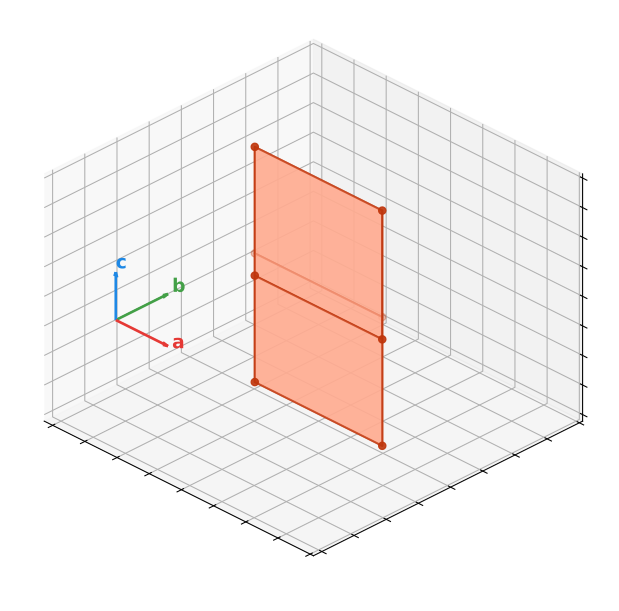
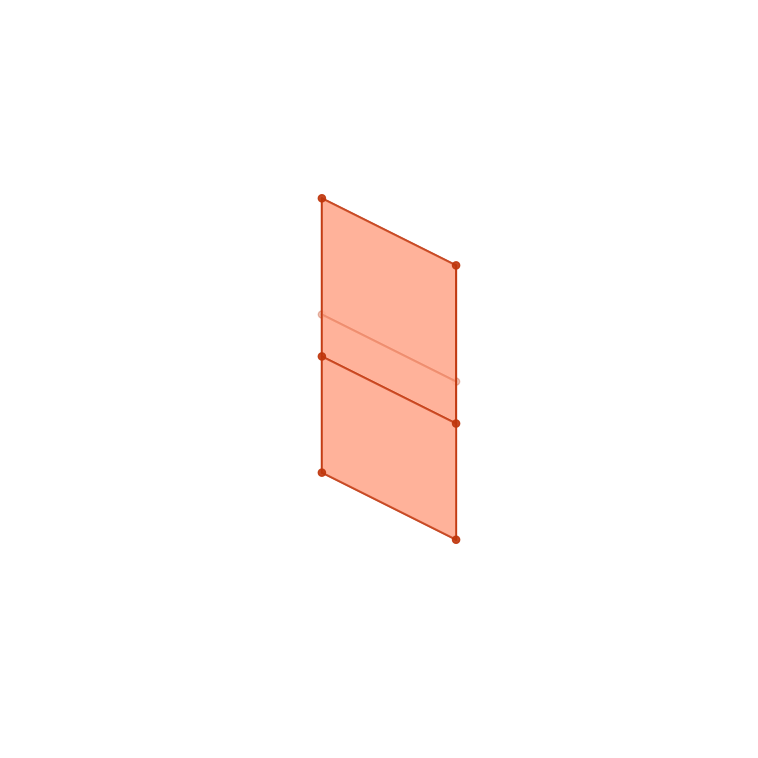
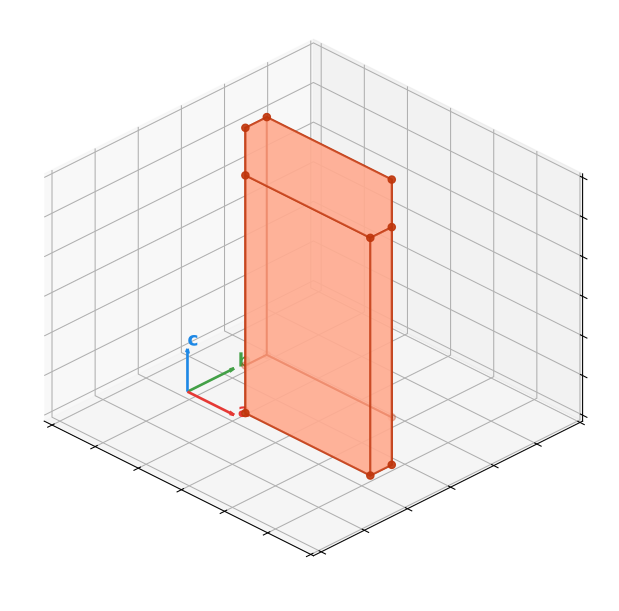
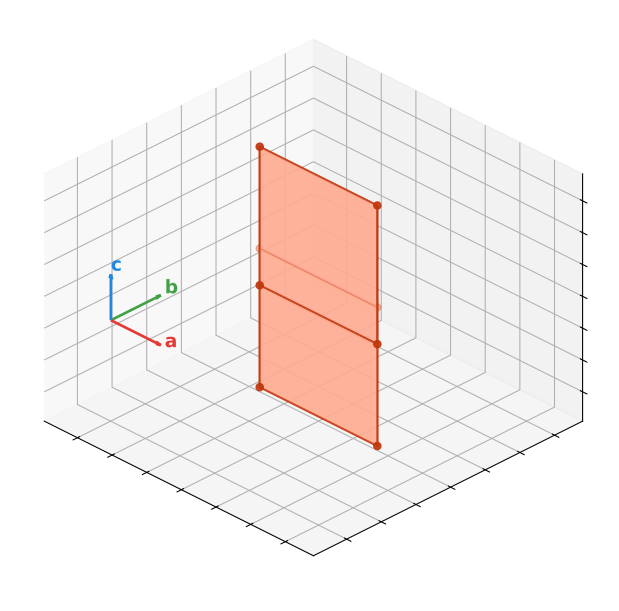
triclinic[-1]:{010}@1.0 + {100}@0.6 + {001}@0.6
triclinic
-1
{010} {100} {001}
Quick Facts
Hardness
4.0
Specific Gravity
2.3
Refractive Index
1.61
Optical Character
AGG
Physical Properties
- Crystal System
- triclinic
- Hardness (Mohs)
- 4.0
- Specific Gravity
- 2.3
- Cleavage
- None (aggregate)
- Fracture
- Conchoidal
- Lustre
- Waxy to sub-vitreous
Optical Properties
- Refractive Index
- 1.61
- Optical Character
- AGG
- Fluorescence
- Variable
Origin & Identification
- Origin
- Simulant
- First Produced
- 1970
- Diagnostic Features
- FTIR: acrylic/PMMA C-H stretching bands ~2950-3000 cm-1 (absent in natural turquoise); SG typically 2.30-2.60 (lower than natural turquoise 2.60-2.90 due to porous binder); overly uniform colour distribution under magnification (vs natural colour distribution); hot-point test: acrylic smell from binder
Characteristics
Colours
Blue to blue-green (same turquoise colour range); may appear more uniform in colour than natural
Common Inclusions
Matrix-like structure may appear uniform; polymer binder visible by FTIR
Notes
Reconstructed turquoise (also "reconstituted turquoise") is made from genuine turquoise powder or low-quality turquoise material bound with a polymeric binder (commonly PMMA acrylic). Chemistry given for the turquoise component (triclinic -1); the reconstruction is the simulant aspect. Crystal system is triclinic (same as turquoise) but the material is a composite powder + binder aggregate. Blumentritt et al. 2023, Journal of Gemmology 38(5):443 (DOI 10.15506/jog.2023.38.5.443) [VERIFIED]: "A New Reconstructed Turquoise Imitation Composed of Turquoise Powder with a PMMA (Acrylic) Binder" — documents identification by FTIR (acrylic C-H bands distinct from natural turquoise). SG typically lower than natural turquoise 2.60-2.90 (due to porous binder fill). FTIR is the primary analytical tool: acrylic C-H stretching bands around 2950-3000 cm-1 are absent in natural turquoise. Webster 1962 (DOI 10.15506/jog.1962.8.8.286) [VERIFIED] covers turquoise simulants broadly. Property values (SG, RI) vary depending on binder fraction.
Related Minerals
Other minerals in the triclinic system