monoclinic Phyllosilicates
Serpentine (Williamsite (Chromian Serpentine))
Formula Mg3Si2O5(OH)4
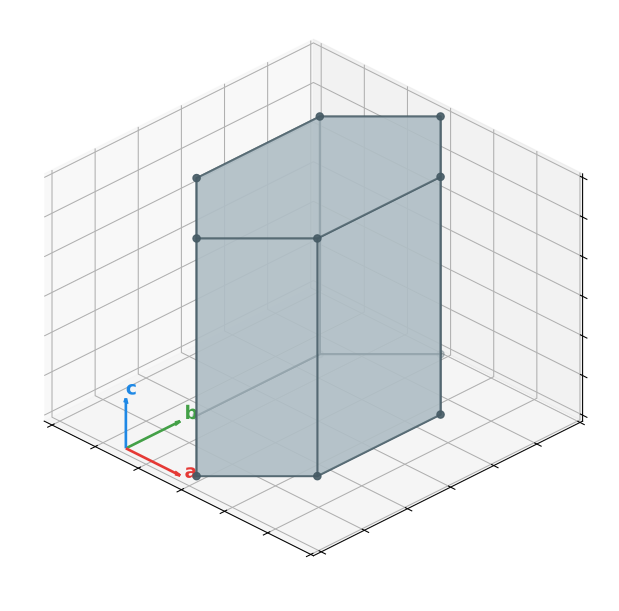
Crystal Structure
 #! Species: Williamsite (Cr-bearing serpentine)
#! System: Monoclinic (2/m)
#! Habit: Massive aggregate; oil-green with chromite inclusions
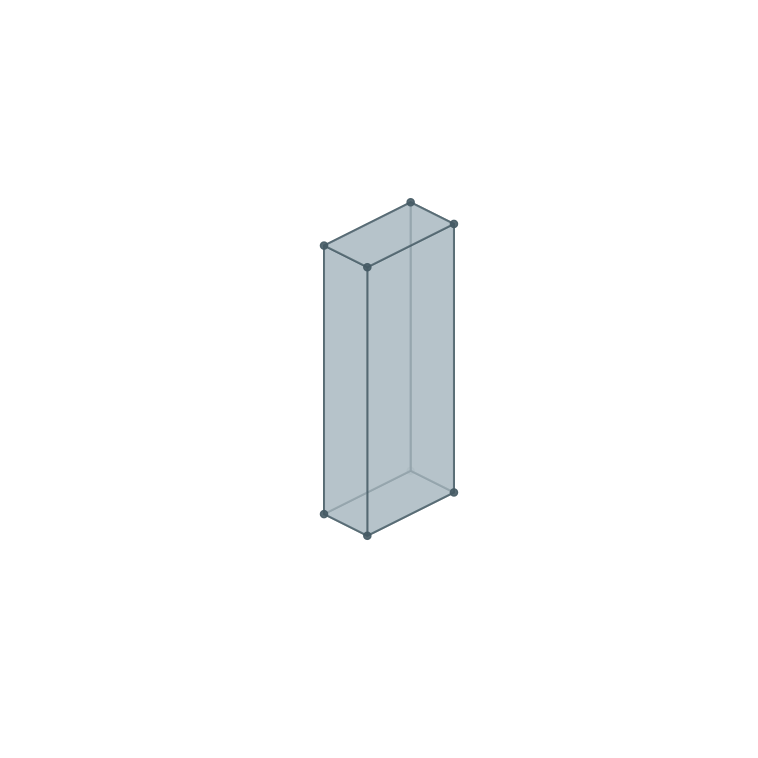
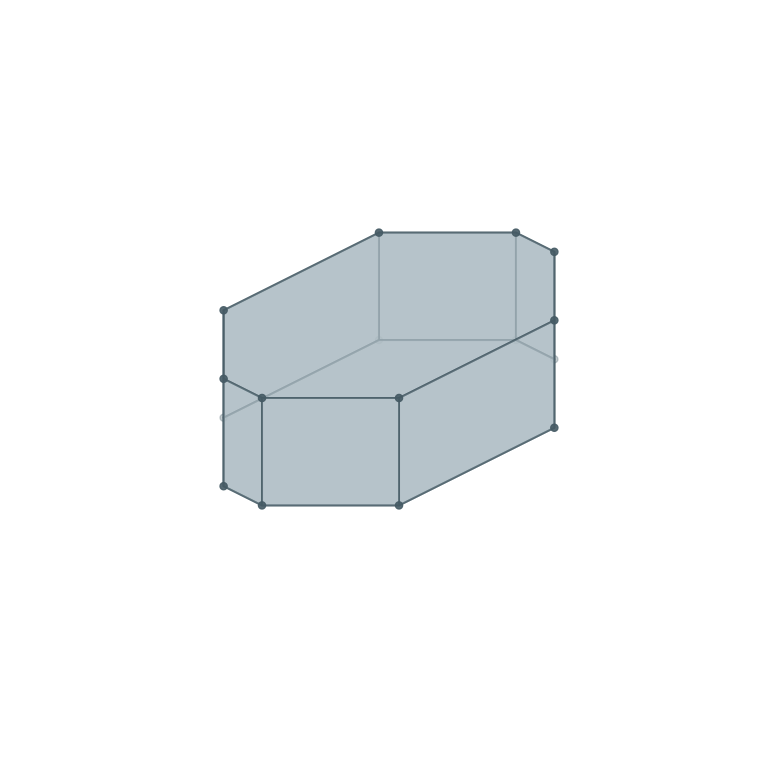
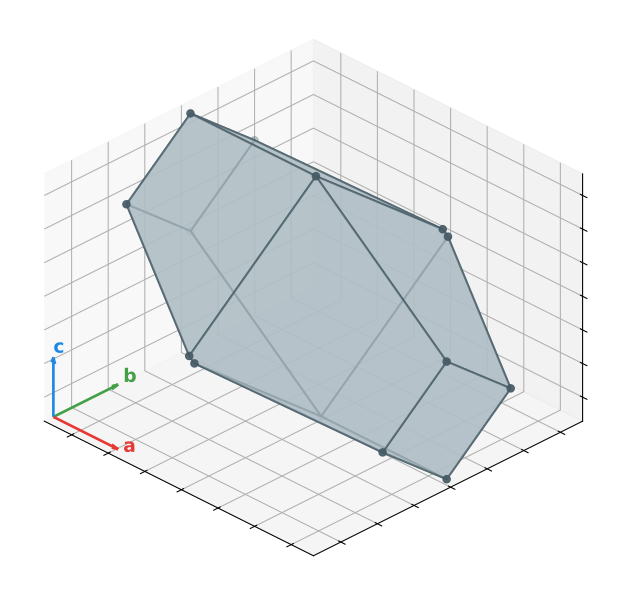
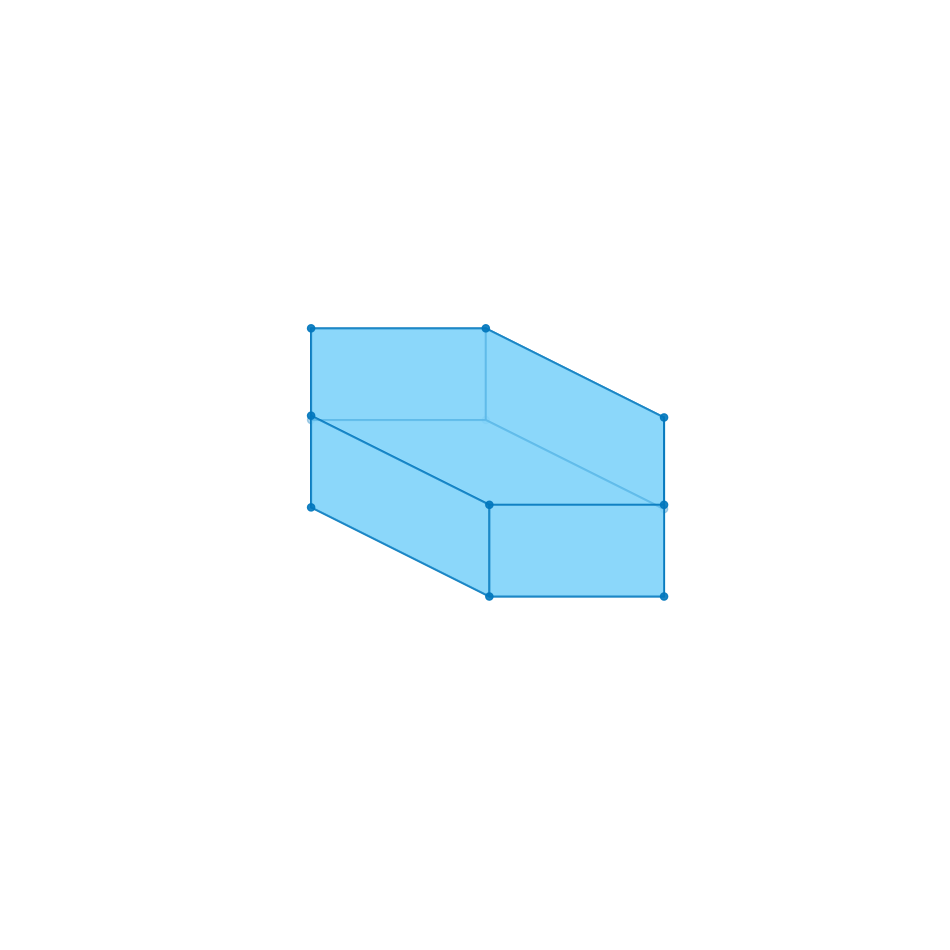
monoclinic[2/m]:{001}@1.0 + {100}@0.5[inclusion:chromite] + {010}@0.7
monoclinic
2/m
{001} {100} {010}
Quick Facts
Hardness
2.5
Specific Gravity
2.44
Refractive Index
1.55
Optical Character
AGG
Physical Properties
- Crystal System
- monoclinic
- Hardness (Mohs)
- 2.5
- Specific Gravity
- 2.44
- Cleavage
- Perfect (single plane in antigorite); fracture conchoidal to uneven in massive material
- Fracture
- Conchoidal to uneven
- Lustre
- Waxy to greasy
Optical Properties
- Refractive Index
- 1.55
- Optical Character
- AGG
- Pleochroism
- None
Characteristics
Colours
Apple green to yellow-green (bowenite; Fe2+/Fe3+ chromophore)Oil-green to chrome-green (williamsite; Cr3+ substituting Mg)Grey-green to mottled green, white, pale bluish-green (various antigorite)Veined/patterned (serpentinite rock with magnetite or chromite veining)
Localities
Rhode Island, USA (Smithfield; type locality for bowenite; named after George T. Bowen)New Zealand (Maori pounamu; bowenite alongside nephrite)Afghanistan (Kandahar; translucent apple-green bowenite)Pennsylvania and Maryland, USA (williamsite; Chrome, Chester County)Cornwall, EnglandConnemara, Ireland (Connemara marble; green serpentine marble)Pakistan, India, China, Korea, South Africa
Common Inclusions
Chromite grains (black to brown; diagnostic in bowenite/williamsite)Magnetite granulesAntigorite plate-like crystal bundlesTalc patchesChrysotile veinlets
Known Treatments
Wax/oil impregnation (common)Dyeing (green colour enhancement)Polymer stabilisation
Crystal Forms
massive
Diagnostic Features
Waxy lustre (most distinctive visual feature); low hardness H 2.5-5 (scratched by knife — critical separator from true jade); RI 1.55-1.57 (much lower than jadeite 1.66 or nephrite 1.62); low SG 2.44-2.62 (lighter than jadeite 3.34 or nephrite 2.90-3.10); chromite inclusions in williamsite
Notes
Principal IMA-approved gem species is antigorite (monoclinic 2/m); lizardite is trigonal (-3m) — both formula Mg3Si2O5(OH)4 with Mg:Fe and Cr substitution. Gem material is invariably polycrystalline massive aggregate; crystal system given for the dominant antigorite (bowenite) phase. Chrysotile (fibrous asbestiform variety) is NOT used as gem material. Chemical formula and mineral group confirmed by Ross & Shannon 1962, USGS Professional Paper 384-A (DOI 10.3133/pp384a) [VERIFIED]. RI and SG from Read 7th ed. (DOI 10.4324/9780080507224) [PARTIALLY_SUPPORTED]. Serpentine as jade simulant ("New jade" trade name) documented by Hobbs 1982, Gems & Gemology (DOI 10.5741/gems.18.1.3) [VERIFIED]. Trade name "New jade" is misleading; material is not jadeite or nephrite.
Related Minerals
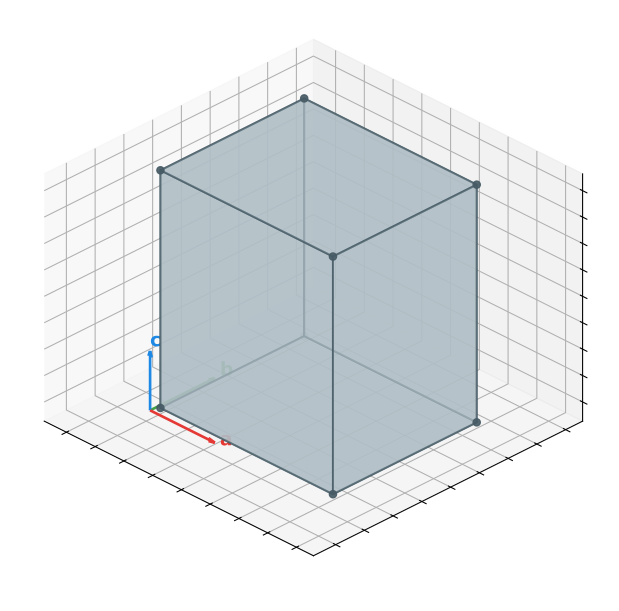
Other minerals in the monoclinic system