orthorhombic Borates
Sinhalite
Formula MgAlBO4
Crystal Structure
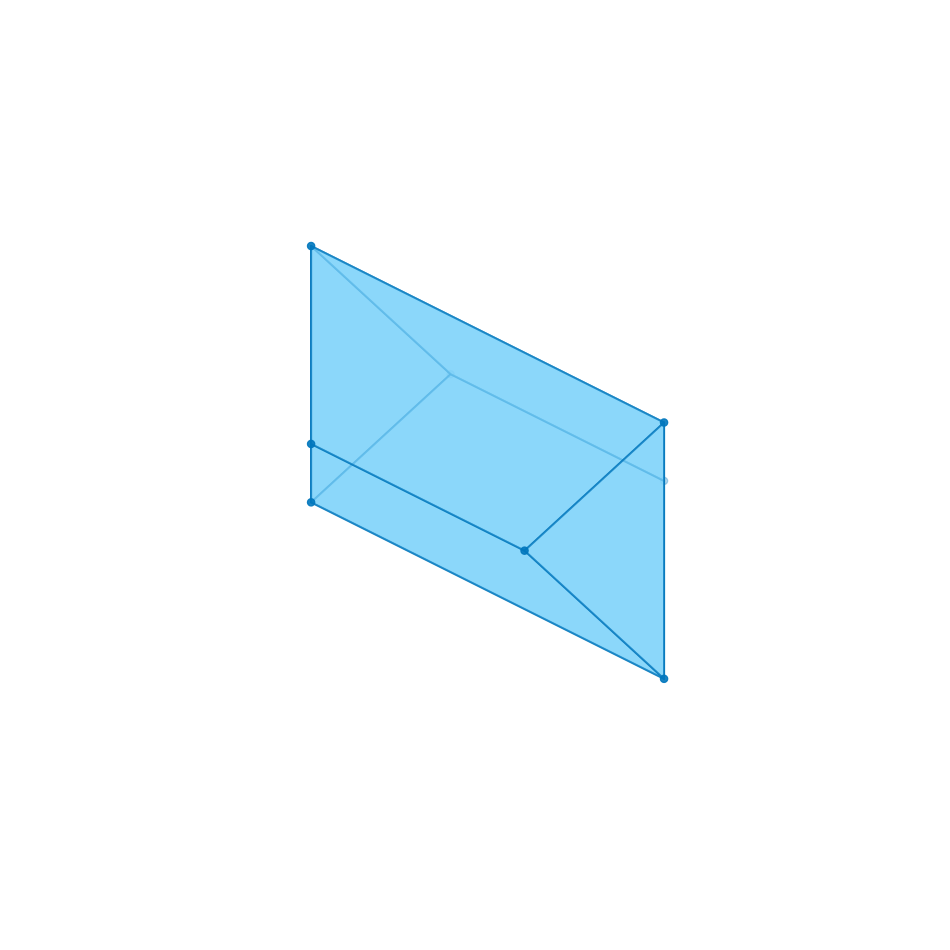
 #! Species: Sinhalite (MgAlBO4)
#! System: Orthorhombic (mmm)
#! Habit: Prismatic; olivine-structure type
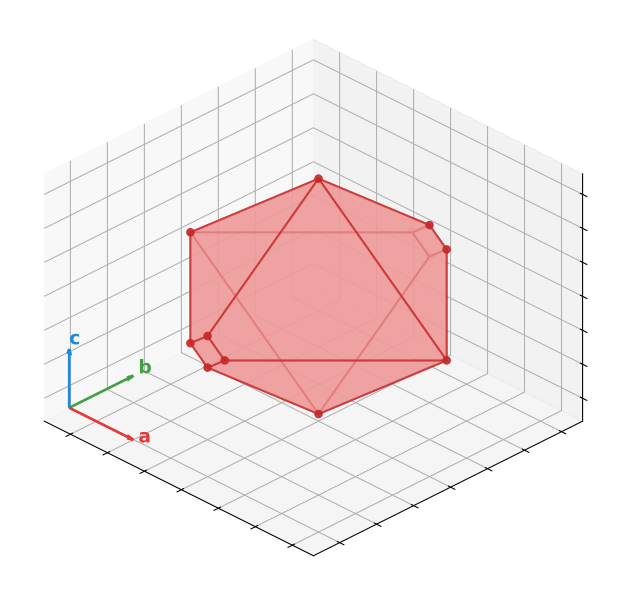
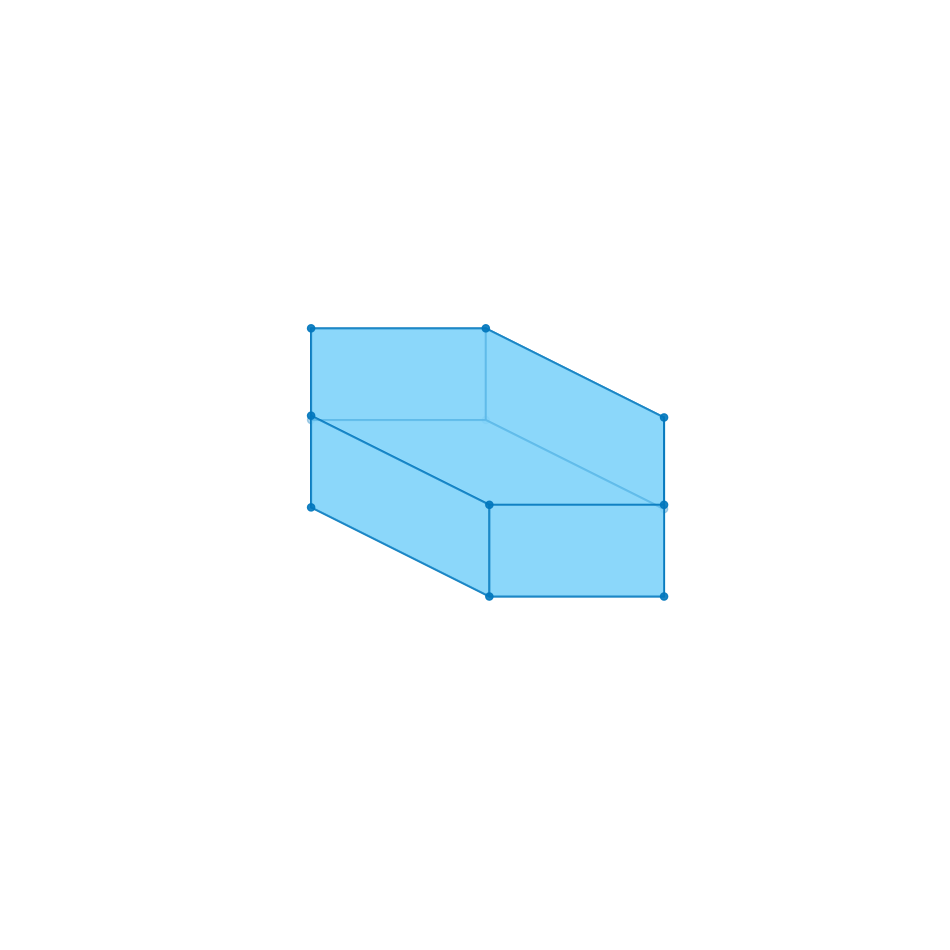
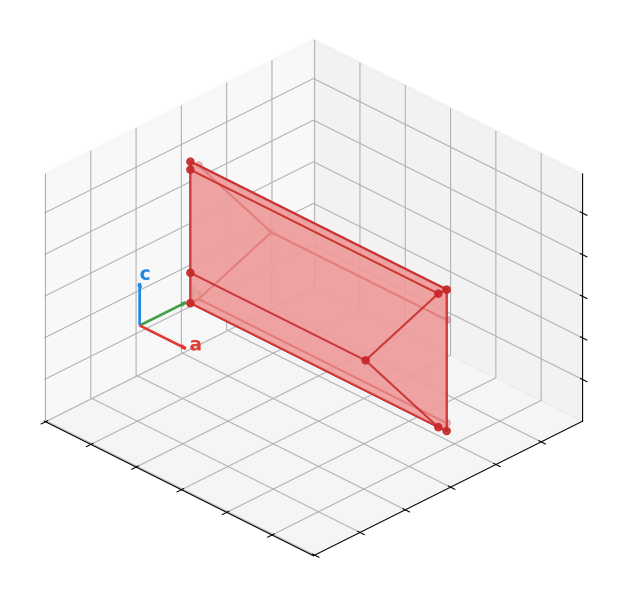
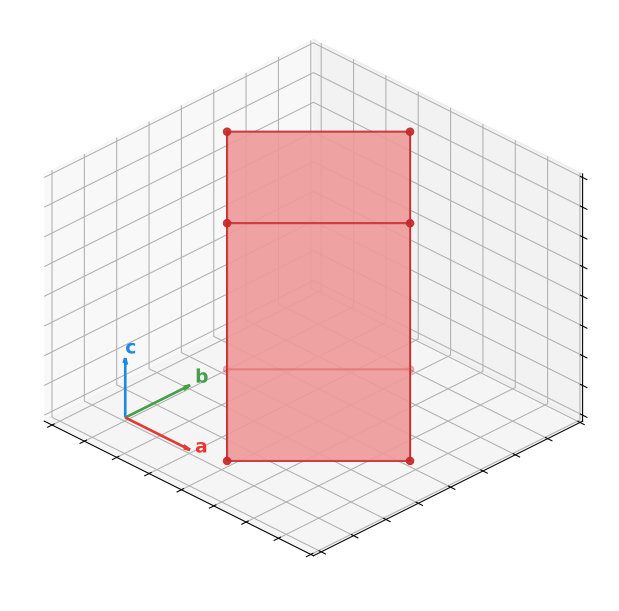
orthorhombic[mmm]:{110}@1.0 + {010}@0.7 + {021}@0.5
orthorhombic
mmm
{110} {010} {021}
Quick Facts
Hardness
6.5
Specific Gravity
3.46
Refractive Index
1.668
Optical Character
Biaxial -
Physical Properties
- Crystal System
- orthorhombic
- Hardness (Mohs)
- 6.5
- Specific Gravity
- 3.46
- Cleavage
- Imperfect
- Fracture
- Conchoidal
- Lustre
- Vitreous
Optical Properties
- Refractive Index
- 1.668
- Birefringence
- 0.038
- Optical Character
- Biaxial -
- Pleochroism
- moderate: Brownish-green / Pale green to yellowish
Characteristics
Colours
Pale yellow-brownBrownish-greenGreenish-brownRarely yellowish
Localities
Sri Lanka (primary; alluvial gem gravels, Ratnapura district)Myanmar (Burma; minor)Tanzania (trace occurrences)
Common Inclusions
Generally clean; fluid inclusions possible
Known Treatments
None known
Crystal Forms
prismpinacoid
Diagnostic Features
Biaxial negative (peridot is biaxial positive — the key optic-sign diagnostic); higher SG 3.46-3.50 vs peridot 3.27-3.37; high birefringence 0.038; differentiated from peridot by optic sign, SG, and absorption spectrum differences (Fe2+ band profile differs)
Notes
MgAlBO4; orthorhombic mmm; olivine-structure type borate. Named from Sinhala (= Sri Lanka). Formally described as a distinct mineral species in 1952; previously confused with brown peridot. Key distinction from peridot: biaxial negative optic sign (peridot is biaxial positive); higher SG 3.46-3.50 (peridot 3.27-3.37). Sri Lanka alluvial occurrence confirmed by Zwaan 1982, Gems & Gemology 18(2):62-71 (DOI 10.5741/gems.18.2.62) [VERIFIED] and Shigley et al. 2000 (DOI 10.5741/gems.36.4.292) [VERIFIED]. Constants from Read 7th ed. (DOI 10.4324/9780080507224) [PARTIALLY_SUPPORTED].
Related Minerals
Other minerals in the orthorhombic system