monoclinic Inosilicates
Star Diopside (Cabochon)
Formula CaMgSi2O6
Crystal Structure
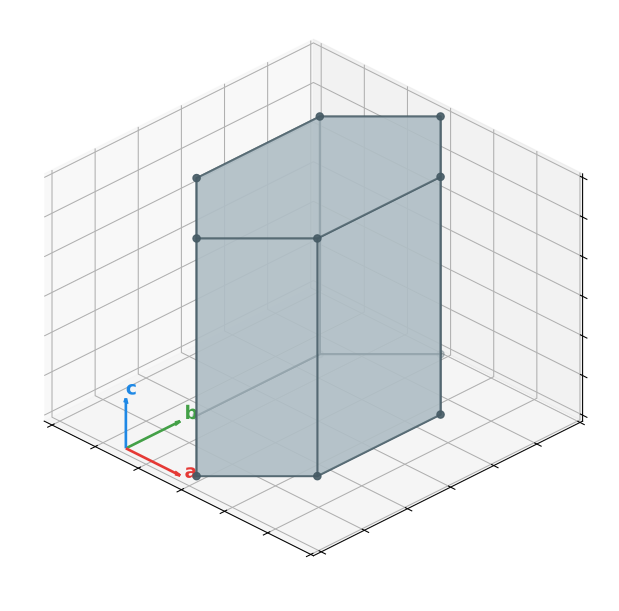
 #! Species: Star Diopside (CaMgSi2O6)
#! System: Monoclinic (2/m)
#! Habit: Massive; magnetite needles in two directions produce four-rayed star
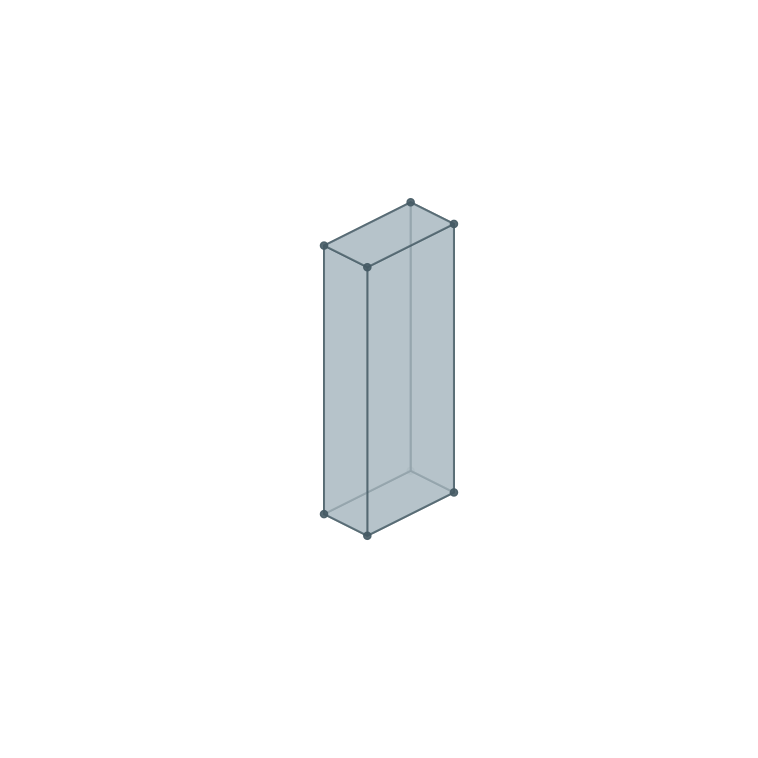
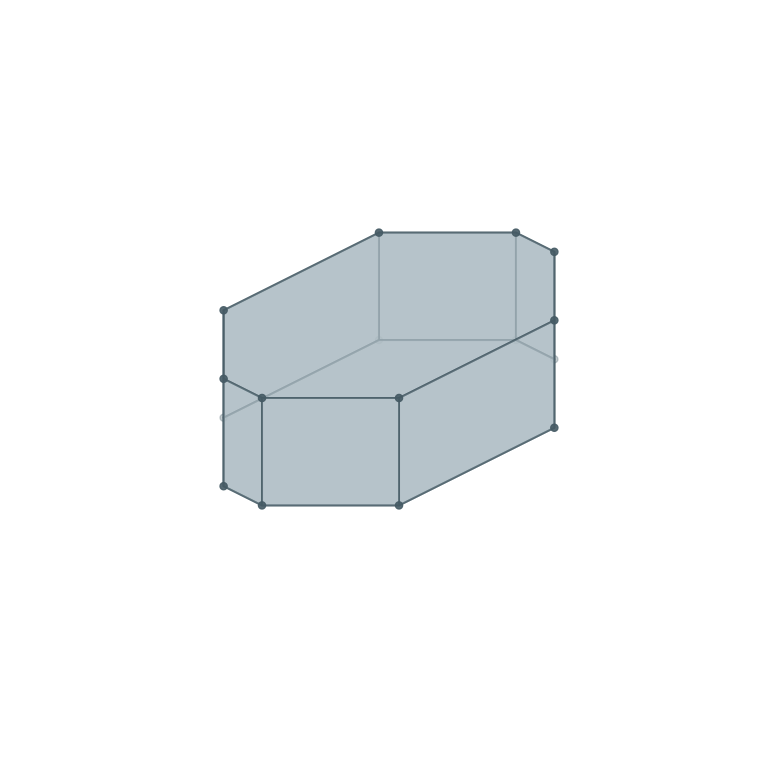
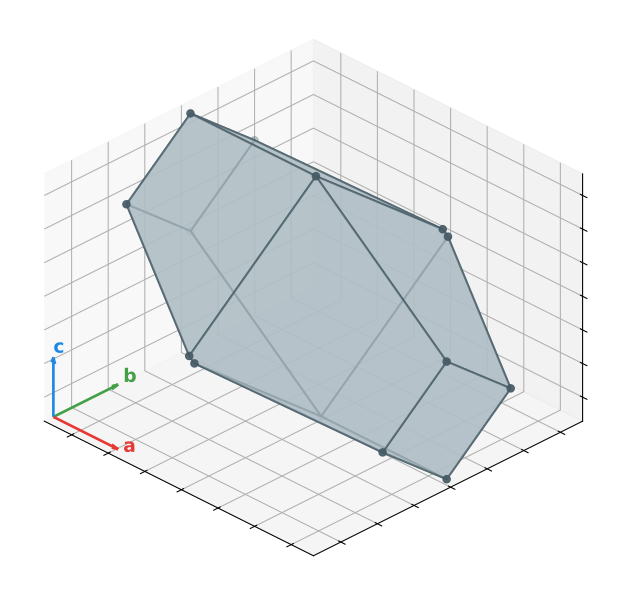
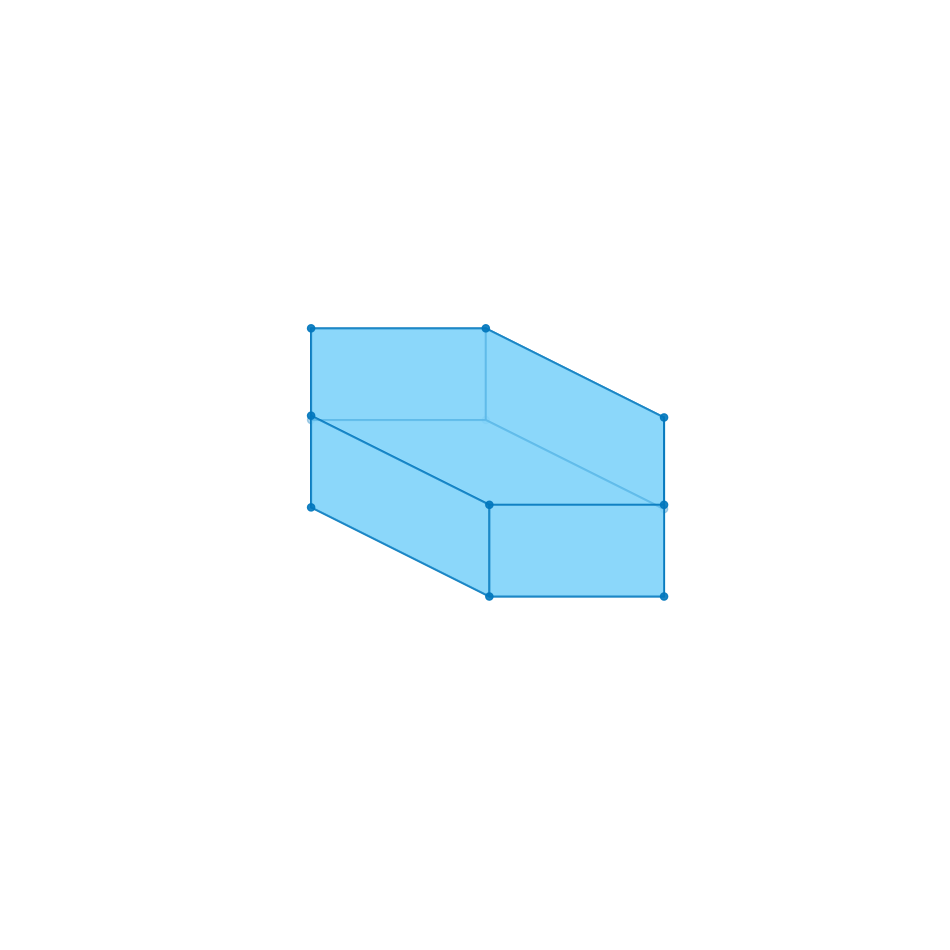
monoclinic[2/m]:{110}@1.0 + {010}@0.5[inclusion:magnetite_needles] + {001}@0.7
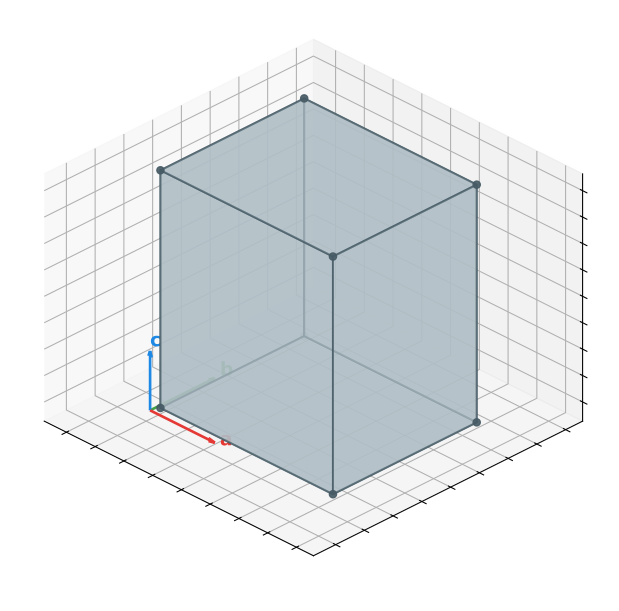
monoclinic
2/m
{110} {010} {001}
Quick Facts
Hardness
5.5
Specific Gravity
3.27
Refractive Index
1.664
Optical Character
Biaxial +
Physical Properties
- Crystal System
- monoclinic
- Hardness (Mohs)
- 5.5
- Specific Gravity
- 3.27
- Cleavage
- Two perfect {110} pyroxene cleavages at ~90°
- Fracture
- Uneven
- Lustre
- Sub-vitreous
Optical Properties
- Refractive Index
- 1.664
- Birefringence
- 0.024-0.031
- Optical Character
- Biaxial +
- Pleochroism
- None (opaque to near-opaque)
Characteristics
Colours
Black to very dark green body colour (dense magnetite needle inclusions)White to grey four-rayed star in reflected light
Localities
India (primary and essentially exclusive commercial source; Tamil Nadu, Madhya Pradesh, Mysore/Karnataka area)
Common Inclusions
Dense magnetite (Fe3O4) needle inclusions in two crystallographic directions perpendicular to c-axis and in the (100) planeThe two-direction magnetite arrangement (not three as in corundum) produces the four-rayed (not six-rayed) star
Known Treatments
None (natural star)
Crystal Forms
massive
Diagnostic Features
Four-rayed star (NOT six-rayed as in corundum) in reflected light; very dark to black body colour from dense magnetite needles; strongly magnetic (attracted to neodymium magnet — from magnetite inclusions; highly diagnostic); biaxial positive (unlike star garnet which is isotropic)
Notes
Black star diopside; variety of diopside (CaMgSi2O6) with dense magnetite (Fe3O4) needle inclusions producing a four-rayed asterism in cabochon cut. Monoclinic 2/m (same crystal system as chrome-diopside.yaml and main diopside.yaml entry). Note: this file is the star variety; diopside.yaml is the general species entry. Use id: star-diopside to avoid collision. Four-rayed star (not six-rayed) because monoclinic symmetry gives two sets of magnetite needle orientations rather than three (as in hexagonal corundum). Strongly magnetic due to magnetite inclusions — use neodymium magnet for rapid identification. India as primary source confirmed by Shigley et al. 2000 (DOI 10.5741/gems.36.4.292) [VERIFIED]. Unusual properties of diopside/enstatite from Sri Lanka confirmed by Zwaan 1996 (DOI 10.5741/gems.32.4.262) [VERIFIED]. Constants from Read 7th ed. (DOI 10.4324/9780080507224) [PARTIALLY_SUPPORTED].
Related Minerals
Other minerals in the monoclinic system