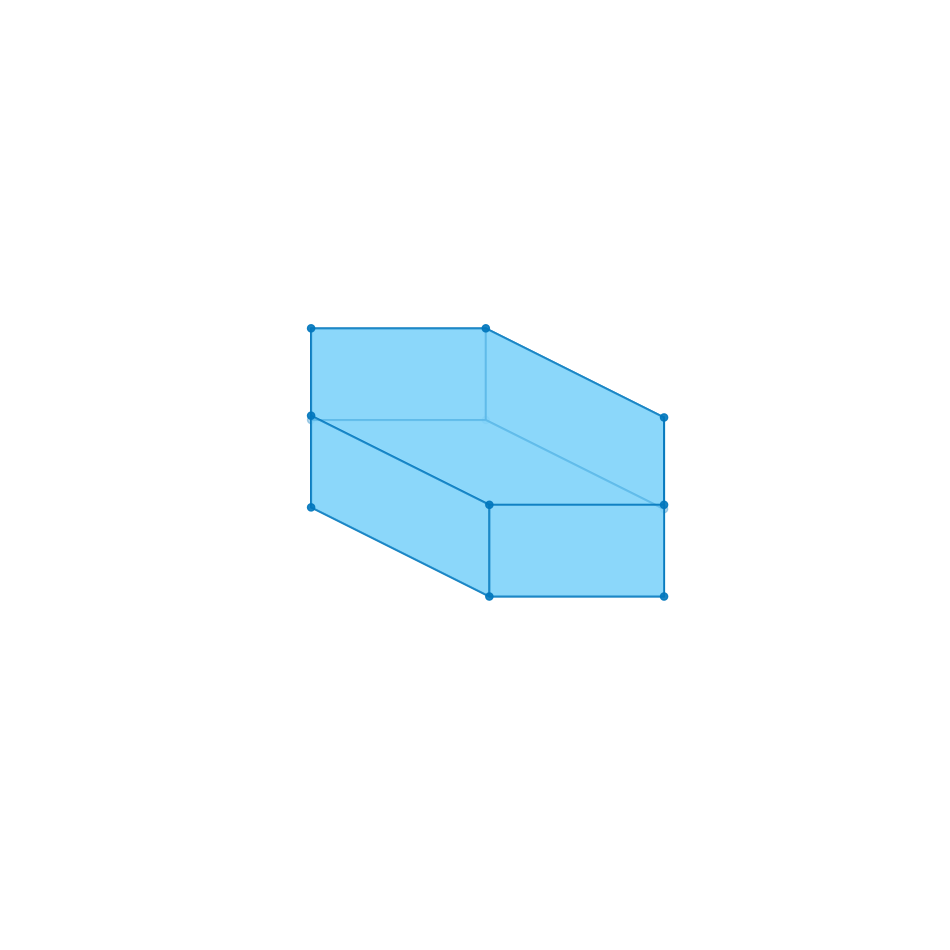
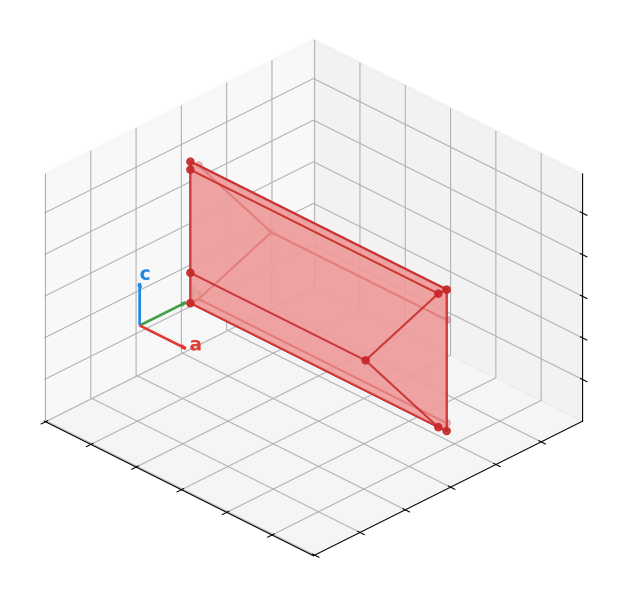
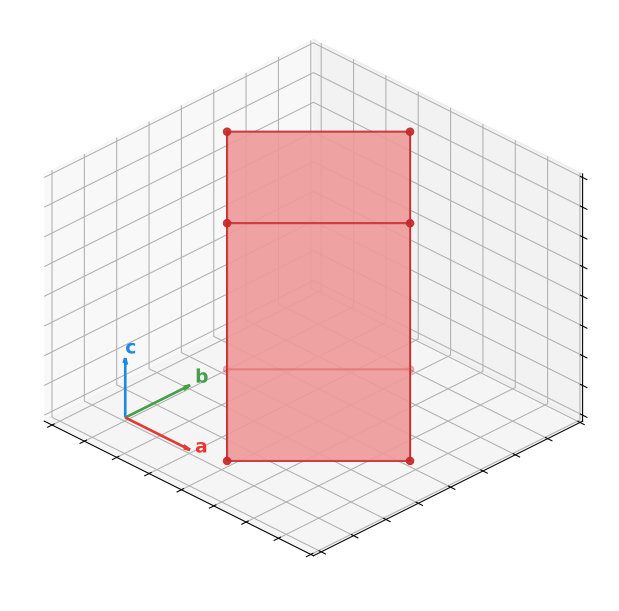
orthorhombic Synthetic synthetic chrysoberyl
Flux-Grown Alexandrite (Crystal)
Formula BeAl2O4:Cr
Crystal Structure
 #! Species: Flux-Grown Alexandrite
#! System: Orthorhombic (mmm)
#! Habit: Tabular from flux growth
orthorhombic[mmm]:{110}@1.0 + {010}@0.7 + {001}@0.4
orthorhombic
mmm
{110} {010} {001}
Quick Facts
Hardness
None
Specific Gravity
3.7
Refractive Index
1.746
Optical Character
Biaxial +
Physical Properties
- Crystal System
- orthorhombic
- Hardness (Mohs)
- None
- Specific Gravity
- 3.7
- Cleavage
- Distinct {110} in two directions
- Fracture
- Conchoidal
- Lustre
- Vitreous
Optical Properties
- Refractive Index
- 1.746
- Birefringence
- 0.009-0.010
- Optical Character
- Biaxial +
- Dispersion
- 0.015
- Pleochroism
- strong: Green (daylight/fluorescent) / Red to purplish-red (incandescent)
- Fluorescence
- Moderate red (LW UV)
Origin & Identification
- Origin
- Synthetic
- Growth Method
- Flux (molybdate Or Vanadium-based Flux Solvent In Platinum Crucible; Slow-cooling Crystallisation)
- Manufacturer
- Chatham Created Gems (San Francisco, USA); Creative Crystals Inc. (USA); Russian laboratory production
- First Produced
- 1964
- Diagnostic Features
- Flux fingerprints (wispy veils following crystal growth sector boundaries; smoky diffuse appearance — unlike natural fingerprints which follow healed fracture planes); platinum platelets (flat hexagonal to irregular Pt metal from Pt crucible; bright mirror-like under dark-field — highly diagnostic); flux feather inclusions (irregular solidified flux masses); absence of twinning planes (natural Russian alexandrite shows polysynthetic twinning); absence of natural inclusions (no negative crystals, no two-phase natural fluid inclusions); Mo or V trace contamination from flux detectable by EDXRF
Characteristics
Colours
Green (daylight)Red to purplish-red (incandescent)
Common Inclusions
Flux fingerprints (wispy veils)Platinum platelets (Pt from crucible)Flux feather inclusions
Notes
Note: existing synthetic-alexandrite-czochralski.yaml already in DB; this file covers the flux-grown variety only (Chatham/Creative Crystals). Do not confuse with Czochralski. Schmetzer, Peretti, Medenbach & Bernhardt 1996, Gems & Gemology 32(3):186 (DOI 10.5741/gems.32.3.186) [VERIFIED]: Russian flux-grown alexandrite diagnostics. Platinum platelets are definitive — absent in all natural alexandrite. Flux veils differ from natural fingerprints by their growth-sector relationship. EDXRF: very low trace elements; Mo or V trace from flux; no significant Fe; no Ga. Distinguishes from hydrothermal (chevron zoning + nail-head spicules) and Czochralski (curved striae + iridium inclusions).
Natural Counterpart
The natural gem this synthetic imitates
Related Minerals
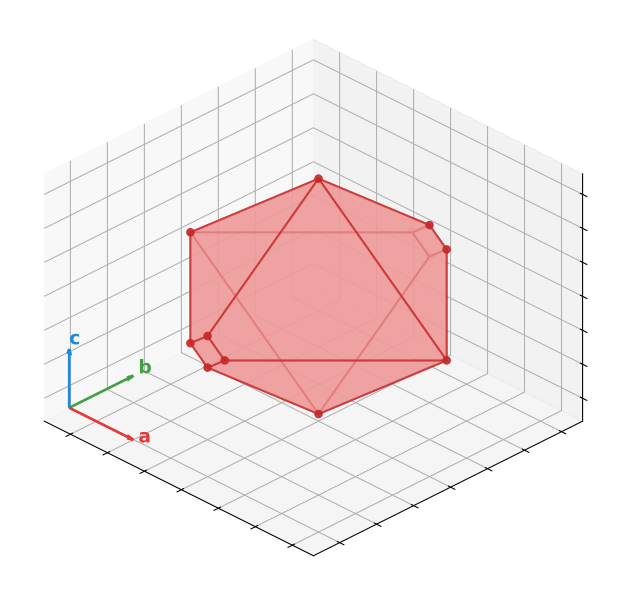
Other minerals in the orthorhombic system