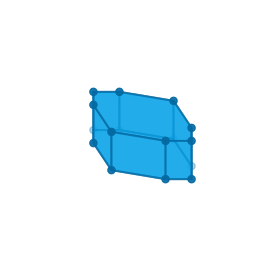
orthorhombic Nesosilicates
Topaz (Prismatic)
Formula Al2SiO4(F,OH)2
Crystal Structure
 #! Species: Topaz
#! System: Orthorhombic (mmm)
#! Habit: Prismatic with parallel striations
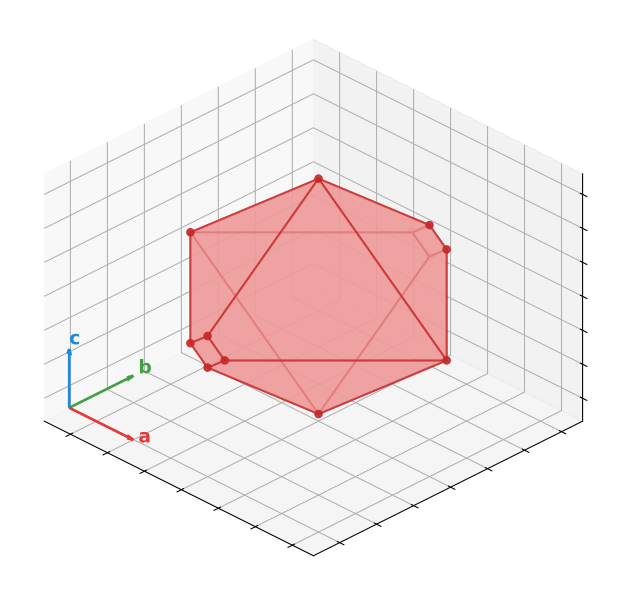
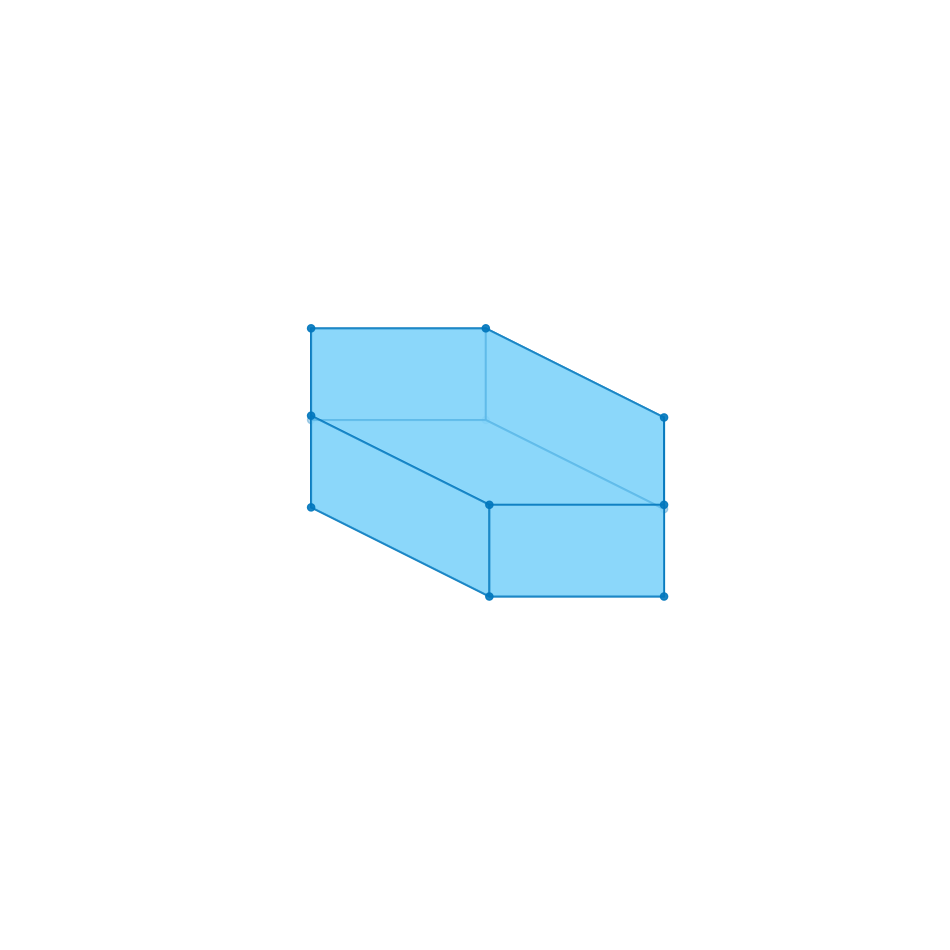
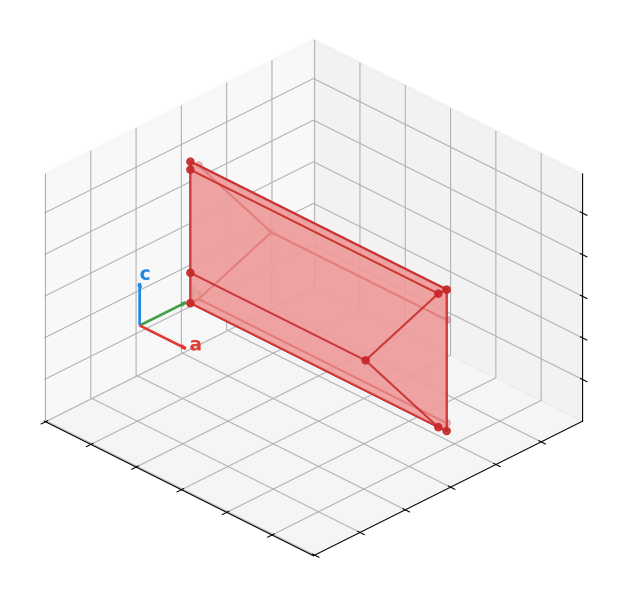
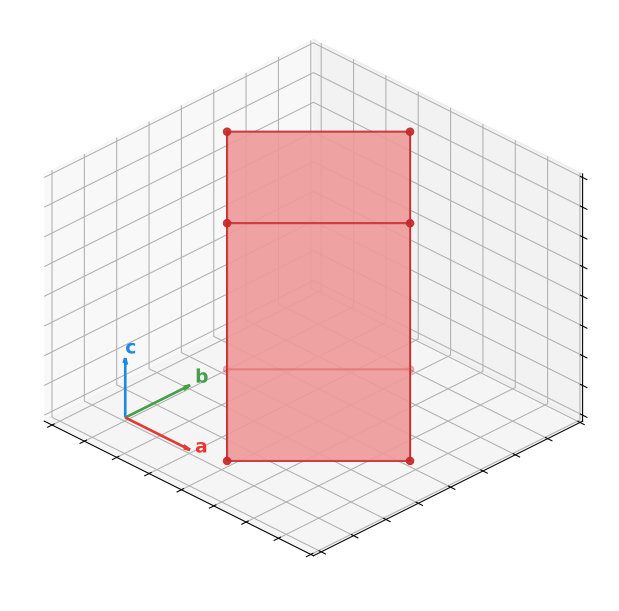
orthorhombic[mmm]:{110}@1.0[striation:parallel] + {120}@0.8 + {001}@0.6
orthorhombic
mmm
{110} {120} {001}
Quick Facts
Hardness
8.0
Specific Gravity
3.5
Refractive Index
1.619
Optical Character
Biaxial +
Physical Properties
- Crystal System
- orthorhombic
- Hardness (Mohs)
- 8.0
- Specific Gravity
- 3.5
- Cleavage
- Perfect basal {001}
- Fracture
- Conchoidal
- Lustre
- Vitreous
Optical Properties
- Refractive Index
- 1.619
- Birefringence
- 0.008
- Optical Character
- Biaxial +
- Dispersion
- 0.014
- Pleochroism
- weak: Near colorless / Pale blue (Weak in blue topaz; more distinct in imperial/sherry varieties)
- Fluorescence
- Weak orange-yellow in some Brazilian imperial (LWUV)
Characteristics
Colours
Imperial (orange to pink-orange)Sherry (yellowish-brown to orange-brown)Blue (Sky, Swiss, London)PinkYellowGoldenColorless
Localities
Brazil (Ouro Preto)PakistanRussia (Urals)USA (Utah, Texas)Sri Lanka
Common Inclusions
Two-phase inclusionsGrowth tubes parallel to c-axisCleavage planesNeedle inclusionsCrystal inclusions
Known Treatments
Irradiation + heat (blue topaz)Heat treatment (pink from brownish)Coating (surface treatments)
Crystal Forms
prismdomepinacoid
Diagnostic Features
Perfect basal cleavage {001}; high SG for a silicate (3.5); orthorhombic elongated crystals
Related Minerals
Other minerals in the orthorhombic system