amorphous Phyllosilicates
Chrysocolla
Formula (Cu,Al)2H2Si2O5(OH)4.nH2O
Crystal Structure
 #! Species: Chrysocolla (hydrous copper aluminosilicate)
#! System: Amorphous (cryptocrystalline)
#! Habit: Massive botryoidal to earthy; blue-green
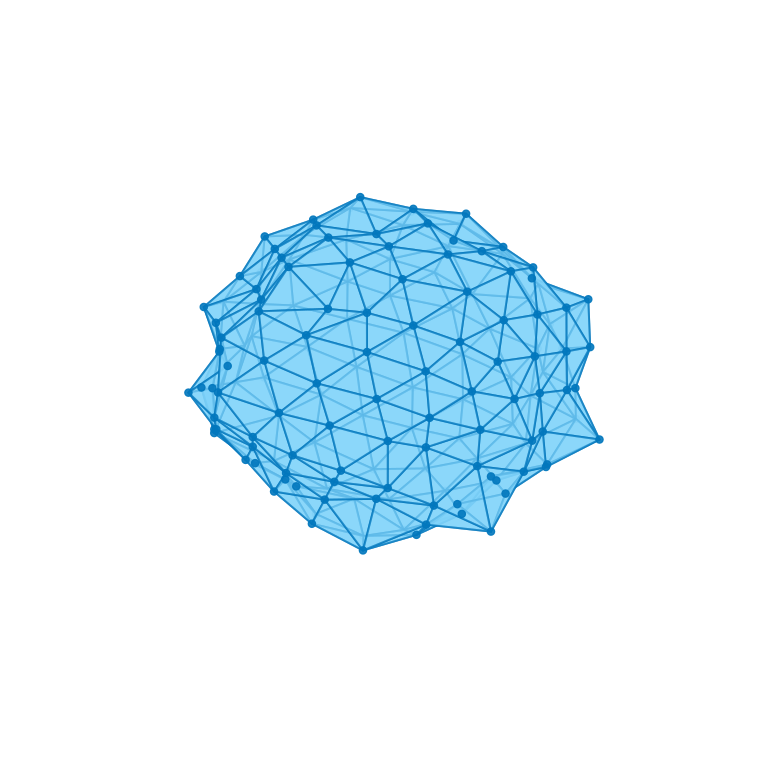
amorphous[waxy]:{botryoidal}
amorphous
none
{botryoidal}
Quick Facts
Hardness
2.5
Specific Gravity
1.93
Refractive Index
1.46
Optical Character
Isotropic (amorphous) to anomalous in cryptocrystalline
Physical Properties
- Crystal System
- amorphous
- Hardness (Mohs)
- 2.5
- Specific Gravity
- 1.93
- Cleavage
- None
- Fracture
- Conchoidal
- Lustre
- Waxy to vitreous (gem silica vitreous; earthy in massive low-quality)
Optical Properties
- Refractive Index
- 1.46
- Optical Character
- Isotropic (amorphous) to anomalous in cryptocrystalline
- Pleochroism
- None
Characteristics
Colours
Blue-green (most common; Cu2+ idiochromatic)Turquoise-blueCyanRarely pure blue or pure green
Localities
Peru (Lily mine, Pisco region; gem silica — highest gem quality blue chalcedony with chrysocolla)Arizona, USA (Globe-Miami district; gem silica and chrysocolla-malachite)Chile (Atacama; copper deposits)Democratic Republic of Congo (Katanga; massive material)Israel (Timna / Eilat stone; chrysocolla + turquoise + malachite mix)
Common Inclusions
Massive; inclusions not relevant for identification[object Object]
Known Treatments
Stabilisation with resin (common for soft material)Polymer impregnation
Crystal Forms
botryoidalmassiveearthy
Diagnostic Features
Very low SG 1.93-2.40 (pure material; much lower than turquoise 2.60-2.90); waxy lustre; Cu2+ blue-green colour (idiochromatic); spot RI typically ~1.50 (vs turquoise ~1.61-1.65); stabilised and polymer-impregnated material common
Notes
Hydrous copper aluminium silicate; amorphous to cryptocrystalline. Crystal system set to amorphous per database convention (same as opal). Structural and chemical characterisation confirmed by Frost & Xi 2013, Vibrational Spectroscopy 63:33-38 (DOI 10.1016/j.vibspec.2012.10.001) [VERIFIED]: "Chrysocolla...is variably described as amorphous or cryptocrystalline." Hardness extremely variable (2.5-7); gem silica (quartz-impregnated variety) reaches 6-7. Cu2+ idiochromatic blue-green colour. Gem silica = blue-green chalcedony with interstital chrysocolla; highest gem quality from Peru. Acid-sensitive (dissolves in HCl). Water-sensitive (dehydration may cause cracking). Constants (SG, RI) from Read 7th ed. (DOI 10.4324/9780080507224) [PARTIALLY_SUPPORTED].
Related Minerals
Other minerals in the amorphous system
Ambroid (Pressed Amber)
Compressed and fused amber chips (same chemical composition as amber — fossil resin; succinite for Baltic amber)
Bone (Ivory Simulant)
Ca5(PO4)3(OH) (hydroxyapatite; same general composition as ivory dentine) in collagen matrix; technically microcrystalline hydroxyapatite but gemologically treated as amorphous/aggregate biomineral
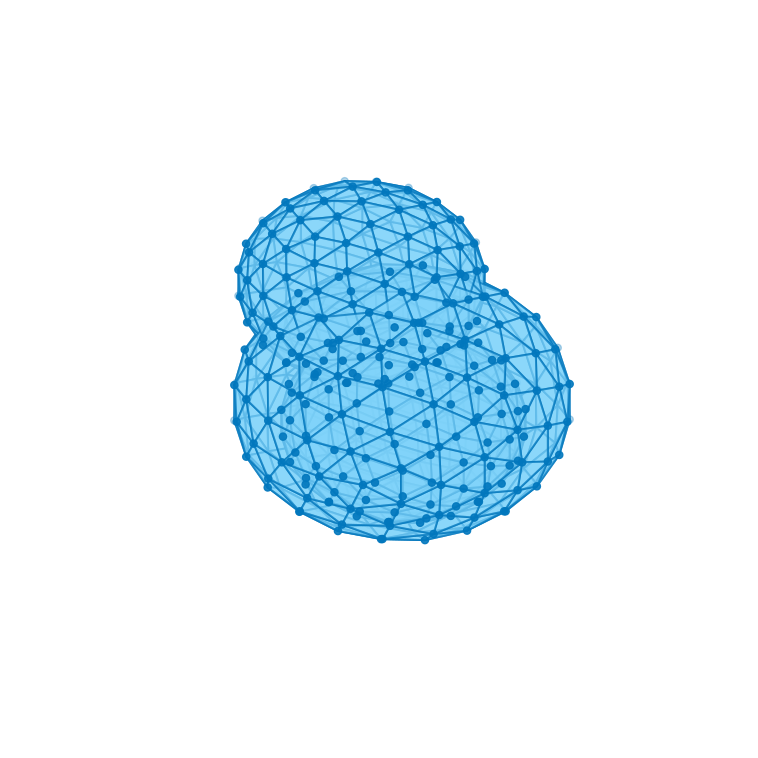
Chalcedony (Botryoidal)
SiO2
Chalcedony (Massive)
SiO2
Copal (Amber Simulant)
Partially polymerised plant resin (labdanoid diterpenes; younger resin; not fully matured/polymerised)
Coral
CaCO3 (calcareous; polycrystalline calcite + organic matrix); black coral = gorgonin protein