hexagonal Cyclosilicates
Benitoite
Formula BaTiSi3O9
Crystal Structure
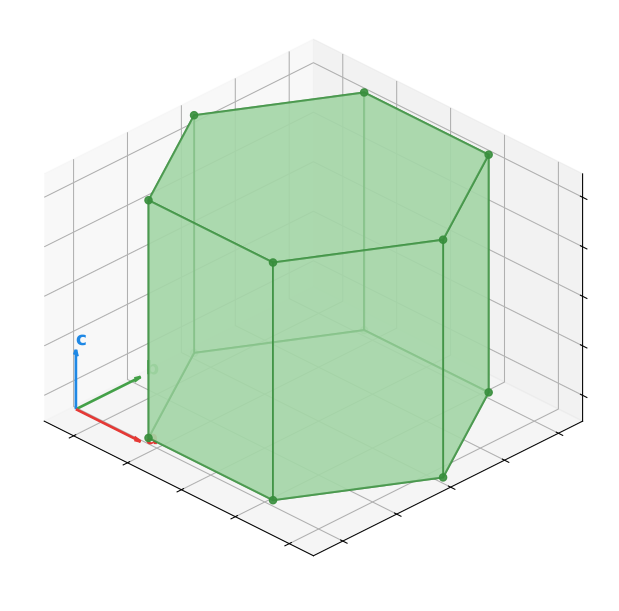
 #! Species: Benitoite (BaTiSi3O9)
#! System: Hexagonal (-6m2, ditrigonal dipyramidal)
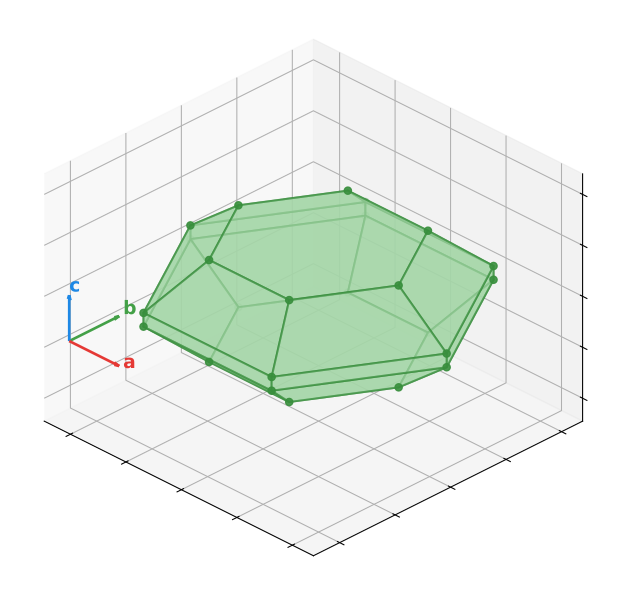
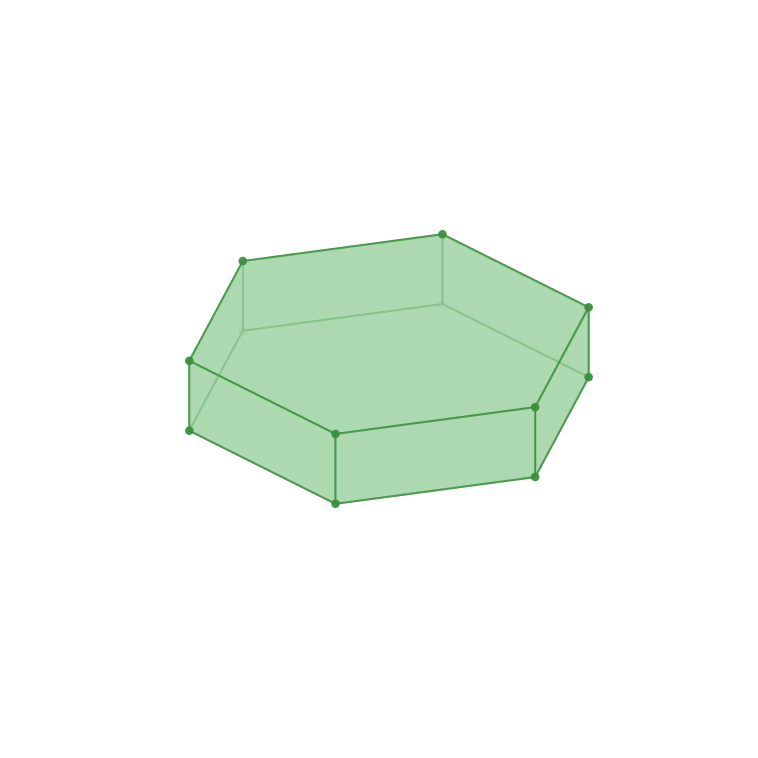
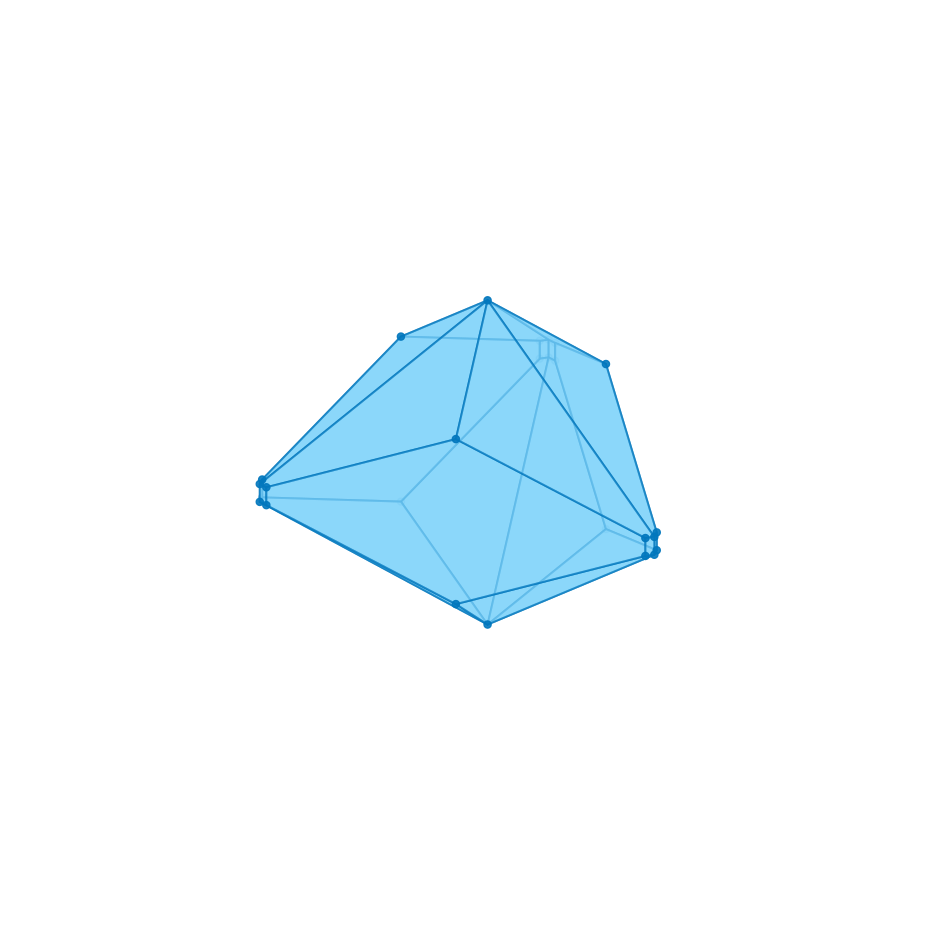
#! Habit: Tabular to pyramidal triangular crystals; vivid blue
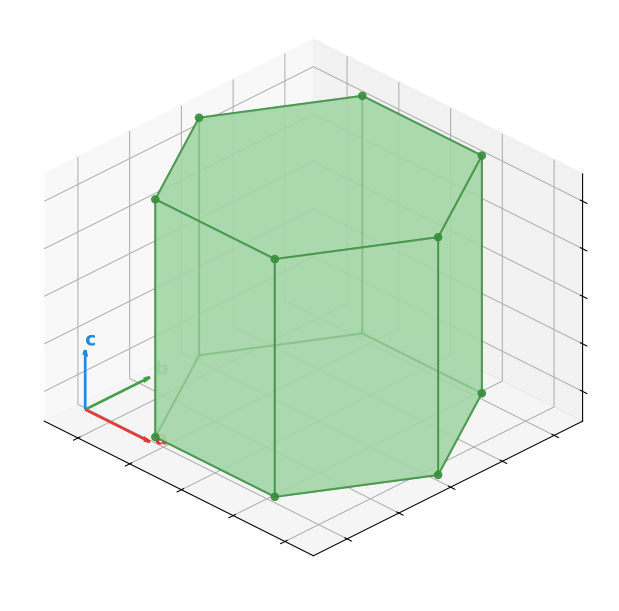
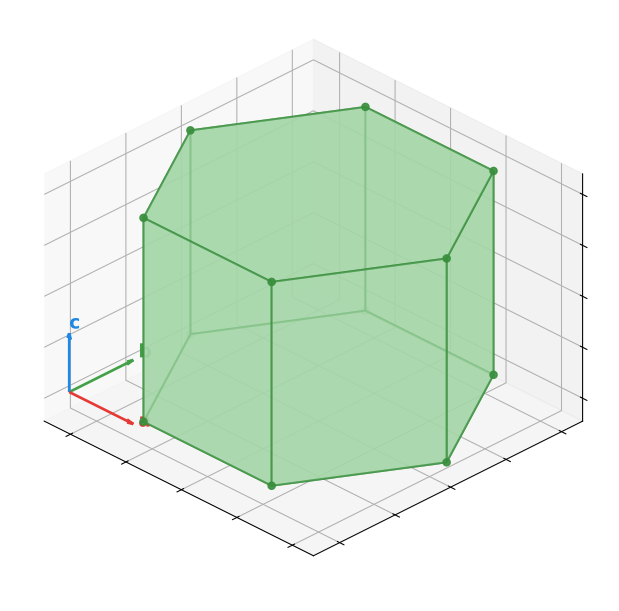
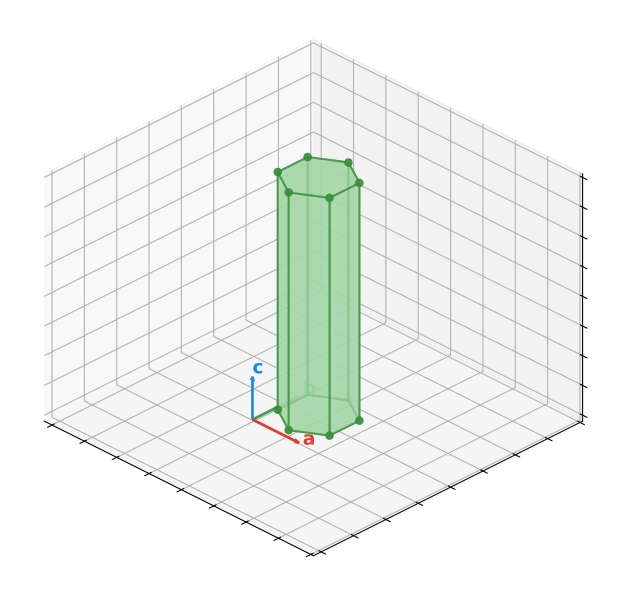
hexagonal[-6m2]:{10-10}@1.0 + {11-20}@0.6 + {10-11}@0.8
hexagonal
-6m2
{10-10} {11-20} {10-11}
Quick Facts
Hardness
6.0
Specific Gravity
3.65
Refractive Index
1.757
Optical Character
Uniaxial +
Physical Properties
- Crystal System
- hexagonal
- Hardness (Mohs)
- 6.0
- Specific Gravity
- 3.65
- Cleavage
- Poor {1010}
- Fracture
- Conchoidal
- Lustre
- Adamantine to vitreous
Optical Properties
- Refractive Index
- 1.757
- Birefringence
- 0.047
- Optical Character
- Uniaxial +
- Dispersion
- 0.044
- Pleochroism
- strong: Vivid blue (ordinary ray perpendicular to c-axis) / Colourless to pale blue (extraordinary ray along c-axis)
Characteristics
Colours
Vivid blue (primary gem colour)ColourlessRarely pinkish-orange
Localities
San Benito County, California, USA (the only commercial source worldwide; gem-quality crystals in natrolite vein in blueschist)Non-gem occurrences in Japan, Belgium, Australia, Czech Republic
Common Inclusions
Generally cleanOccasional two-phase fluid inclusionsNeptunite crystals (black associated mineral in matrix specimens)
Known Treatments
None known
Crystal Forms
dipyramidprism
Diagnostic Features
Intense blue fluorescence under shortwave UV (SWUV) — the most immediately diagnostic field test; strong dichroism (vivid blue / colourless in dichroscope); very high birefringence 0.047 (strong fire and doubling); RI above standard refractometer range (1.79 limit); only commercial source: New Idria district, San Benito County, California
Notes
BaTiSi3O9; barium titanium cyclosilicate; hexagonal point group -6m2 (ditrigonal dipyramidal). Crystals have a triangular (not hexagonal) outline due to this point group. State gemstone of California since 1985. Primary gemmological reference: Laurs, Rohtert & Gray 1997, Gems & Gemology 33(3):166-187 (DOI 10.5741/gems.33.3.166) [VERIFIED via live API]. SWUV fluorescence mechanism confirmed by Vigier, Fritsch et al. 2023, Minerals 13(1):104 (DOI 10.3390/min13010104) [VERIFIED via live API]: colour from O2- to Ti4+ ligand-to-metal charge transfer in TiO6 groups. Fluorescence characterisation by Zhang & Shen 2023 (DOI 10.3390/min13050626) [VERIFIED]. Dispersion 0.044 is equal to diamond; confirmed per VERIFIED.md Conflict 8 (no conflict; both values accurate). RI 1.757-1.804 is above standard refractometer range; SG measurable hydrostatically.
Related Minerals
Other minerals in the hexagonal system