
amorphous Simulant general simulant
Glass (Paste) (Faceted)
Formula SiO2 + various metal oxides (lead, barium)
Crystal Structure
amorphous
Quick Facts
Hardness
5.0
Specific Gravity
2.3
Refractive Index
1.5
Optical Character
Isotropic (amorphous)
Physical Properties
- Crystal System
- amorphous
- Hardness (Mohs)
- 5.0
- Specific Gravity
- 2.3
- Fracture
- Conchoidal
- Lustre
- Vitreous
Optical Properties
- Refractive Index
- 1.5
- Birefringence
- 0
- Optical Character
- Isotropic (amorphous)
- Fluorescence
- Variable
Origin & Identification
- Origin
- Simulant
- Diagnostic Features
- Gas bubbles (round, elongated, or clustered), swirl marks (flow lines), conchoidal fracture with vitreous lustre, warm to touch (low thermal conductivity), may show orange flash under Chelsea filter, single refractive, hardness only 5-6
Characteristics
Colours
All colours (by metal oxide doping)
Common Inclusions
Gas bubblesSwirl marks (flow lines)Devitrification patches
Related Minerals
Other minerals in the amorphous system
Ambroid (Pressed Amber)
Compressed and fused amber chips (same chemical composition as amber — fossil resin; succinite for Baltic amber)
Bone (Ivory Simulant)
Ca5(PO4)3(OH) (hydroxyapatite; same general composition as ivory dentine) in collagen matrix; technically microcrystalline hydroxyapatite but gemologically treated as amorphous/aggregate biomineral
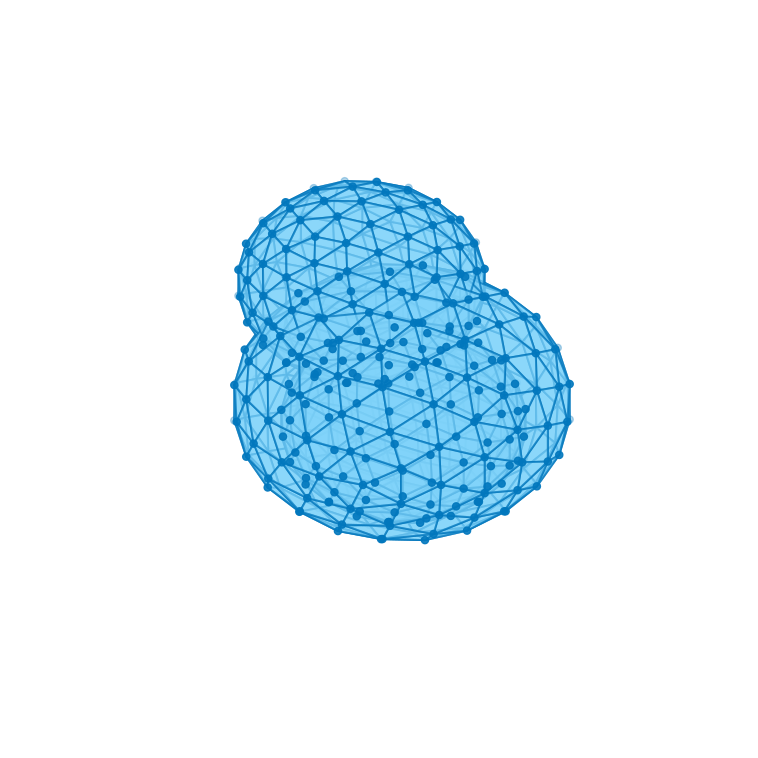
Chalcedony (Botryoidal)
SiO2
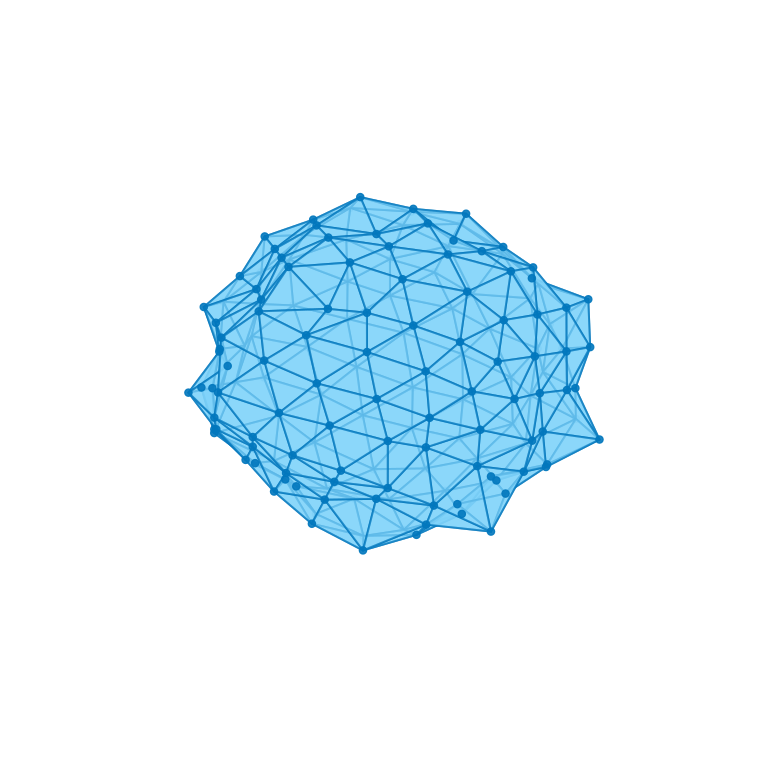
Chalcedony (Massive)
SiO2
Chrysocolla
(Cu,Al)2H2Si2O5(OH)4.nH2O
Copal (Amber Simulant)
Partially polymerised plant resin (labdanoid diterpenes; younger resin; not fully matured/polymerised)