amorphous Tectosilicates
Lazurite (Massive (typical))
Formula Na3Ca(Al3Si3O12)S
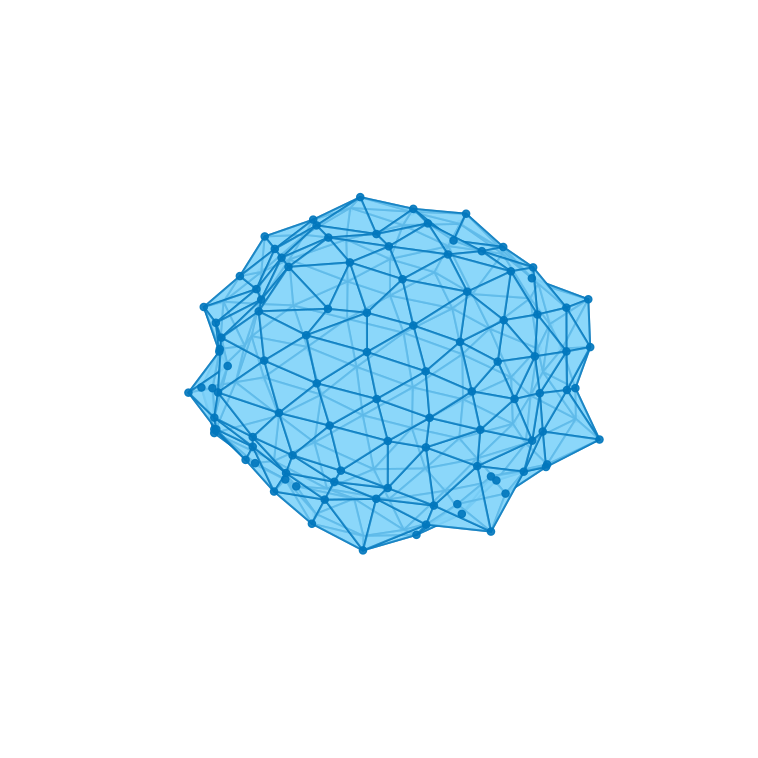
Crystal Structure
 #! Species: Lazurite
#! System: Amorphous (cryptocrystalline)
#! Habit: Massive aggregates with pyrite and calcite inclusions
amorphous[cryptocrystalline]:{massive}[inclusion:pyrite, inclusion:calcite]
amorphous
m3m
{massive}
Quick Facts
Hardness
5.0
Specific Gravity
2.38
Refractive Index
1.5
Optical Character
Isotropic
Physical Properties
- Crystal System
- amorphous
- Hardness (Mohs)
- 5.0
- Specific Gravity
- 2.38
- Cleavage
- Imperfect {110}
- Fracture
- Uneven
- Lustre
- Vitreous to greasy
Optical Properties
- Refractive Index
- 1.5
- Optical Character
- Isotropic
- Pleochroism
- None (isotropic)
Characteristics
Colours
Deep blueAzure blueViolet-blueGreenish-blue
Localities
Afghanistan (Badakhshan - type locality, 6000+ years of mining)Chile (Andes)Russia (Lake Baikal)MyanmarUSA (California, Colorado)
Crystal Forms
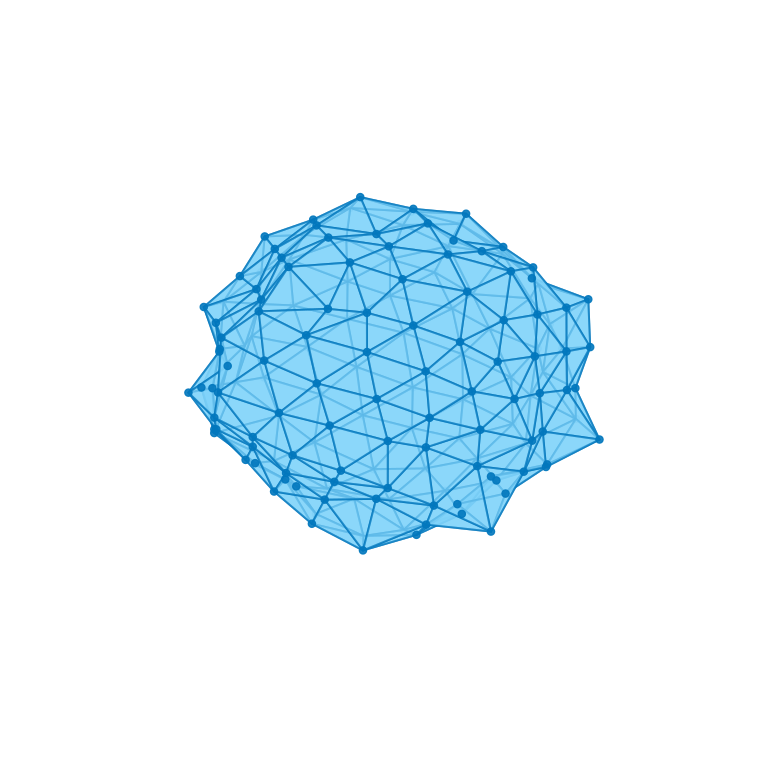
massive
Notes
Usually occurs massive in lapis lazuli rock with pyrite and calcite
Related Minerals
Other minerals in the amorphous system
Ambroid (Pressed Amber)
Compressed and fused amber chips (same chemical composition as amber — fossil resin; succinite for Baltic amber)
Bone (Ivory Simulant)
Ca5(PO4)3(OH) (hydroxyapatite; same general composition as ivory dentine) in collagen matrix; technically microcrystalline hydroxyapatite but gemologically treated as amorphous/aggregate biomineral
Chalcedony (Botryoidal)
SiO2
Chalcedony (Massive)
SiO2
Chrysocolla
(Cu,Al)2H2Si2O5(OH)4.nH2O
Copal (Amber Simulant)
Partially polymerised plant resin (labdanoid diterpenes; younger resin; not fully matured/polymerised)