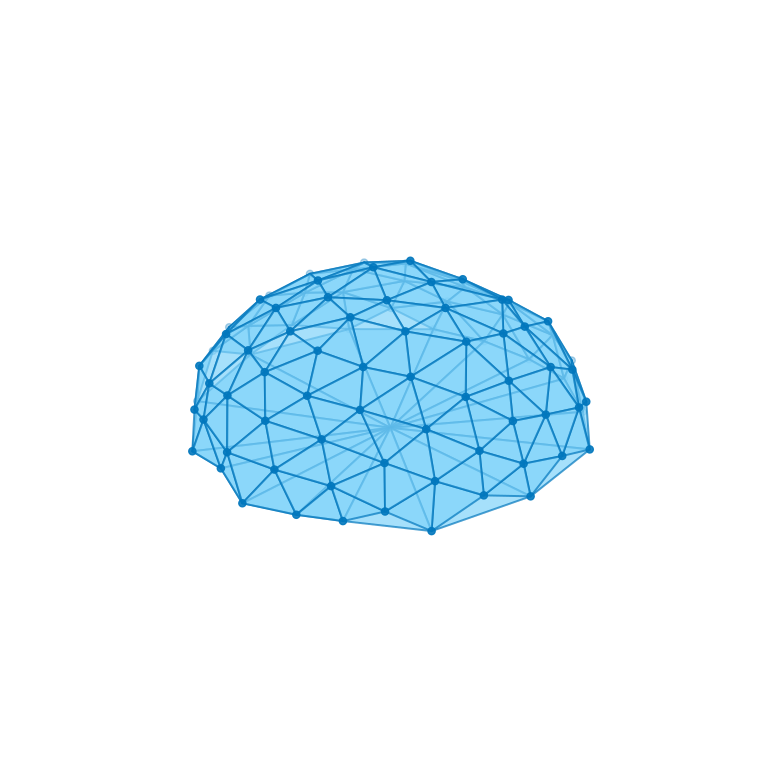
amorphous Mineraloid
Pearl (nacre)
Formula CaCO3 (aragonite) + conchiolin
Crystal Structure
 #! Species: Pearl
#! System: Amorphous (organic aggregate)
#! Habit: Mammillary with concentric nacre banding
amorphous[waxy]:{mammillary}[banding:concentric]
amorphous
mmm
{mammillary}
Quick Facts
Hardness
2.5
Specific Gravity
2.6
Refractive Index
1.52
Optical Character
Biaxial -
Physical Properties
- Crystal System
- amorphous
- Hardness (Mohs)
- 2.5
- Specific Gravity
- 2.6
- Fracture
- Uneven
- Lustre
- Pearly (nacreous)
Optical Properties
- Refractive Index
- 1.52
- Optical Character
- Biaxial -
- Pleochroism
- None
Characteristics
Colours
WhiteCreamPinkGold (South Sea)Black (Tahitian)SilverBlue-greyOvertones (rose, green, orient)
Localities
Persian Gulf (natural, historic)Japan (Akoya cultured)Australia (South Sea)Tahiti (black pearls)China (freshwater)Philippines
Known Treatments
BleachingDyeingIrradiation (for color)Coating
Crystal Forms
mammillaryconcentric layers
Notes
Organic gem — layered nacre aggregate, not a single crystal
Related Minerals
Other minerals in the amorphous system
Ambroid (Pressed Amber)
Compressed and fused amber chips (same chemical composition as amber — fossil resin; succinite for Baltic amber)
Bone (Ivory Simulant)
Ca5(PO4)3(OH) (hydroxyapatite; same general composition as ivory dentine) in collagen matrix; technically microcrystalline hydroxyapatite but gemologically treated as amorphous/aggregate biomineral
Chalcedony (Botryoidal)
SiO2
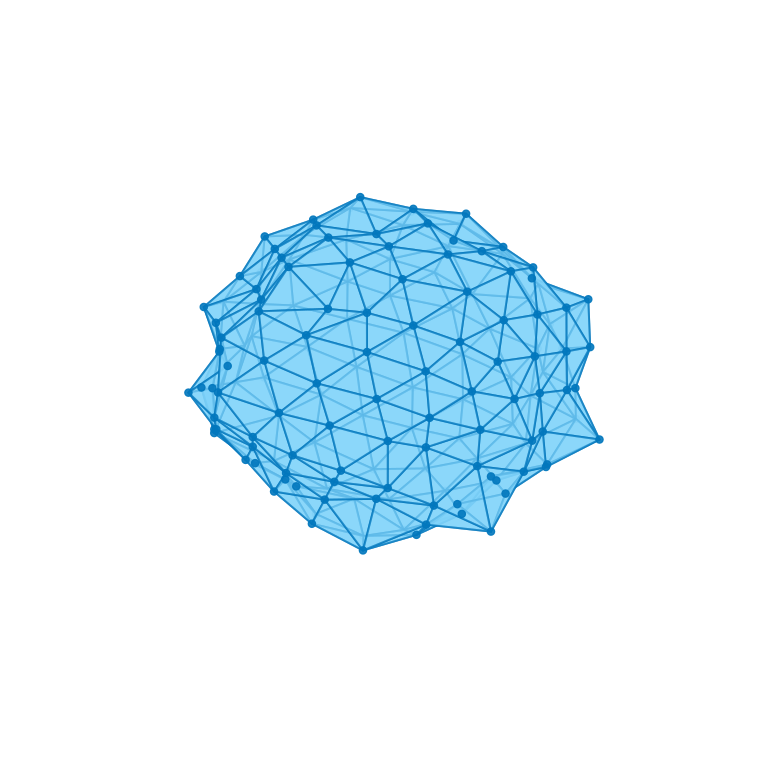
Chalcedony (Massive)
SiO2
Chrysocolla
(Cu,Al)2H2Si2O5(OH)4.nH2O
Copal (Amber Simulant)
Partially polymerised plant resin (labdanoid diterpenes; younger resin; not fully matured/polymerised)