amorphous Tectosilicates
Sodalite (Massive (typical))
Formula Na8(Al6Si6O24)Cl2
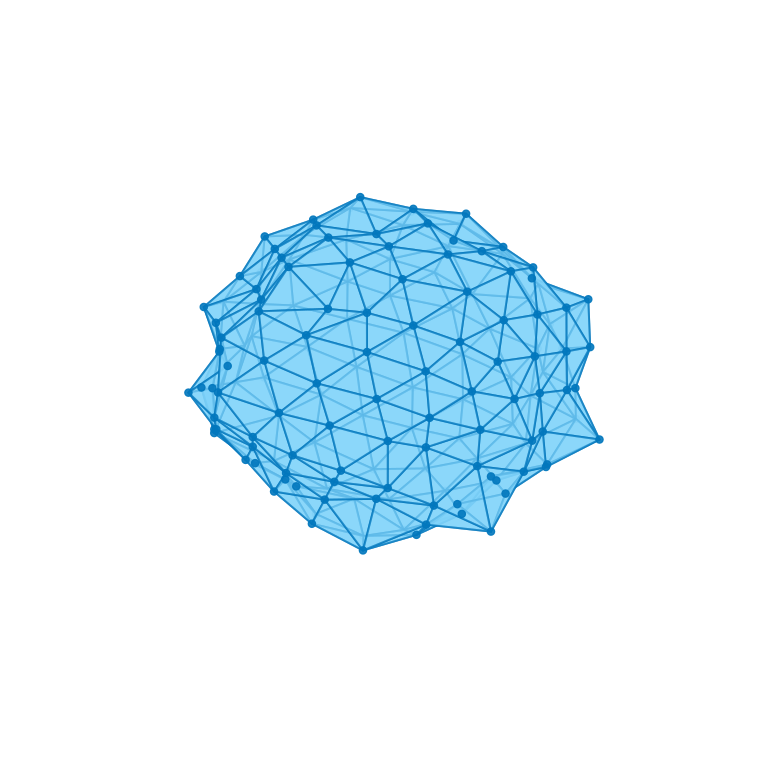
Crystal Structure
 #! Species: Sodalite
#! System: Amorphous (cryptocrystalline)
#! Habit: Massive aggregates
amorphous[cryptocrystalline]:{massive}[colour:blue]
amorphous
m3m
{massive}
Quick Facts
Hardness
5.5
Specific Gravity
2.27
Refractive Index
1.483
Optical Character
Isotropic
Physical Properties
- Crystal System
- amorphous
- Hardness (Mohs)
- 5.5
- Specific Gravity
- 2.27
- Cleavage
- Poor {110}
- Fracture
- Conchoidal to uneven
- Lustre
- Vitreous to greasy
Optical Properties
- Refractive Index
- 1.483
- Optical Character
- Isotropic
- Dispersion
- 0.018
- Pleochroism
- None (isotropic)
- Fluorescence
- Strong orange (LWUV); tenebrescent (hackmanite variety)
Characteristics
Colours
Royal blueBlueWhiteGrayPinkGreen (rare)
Localities
BrazilCanada (Bancroft, Ontario)NamibiaBoliviaIndiaMyanmar
Crystal Forms
massive
Notes
Distinguished from lapis lazuli by absence of pyrite and uniform color; hackmanite shows photochromism
Related Minerals
Other minerals in the amorphous system
Ambroid (Pressed Amber)
Compressed and fused amber chips (same chemical composition as amber — fossil resin; succinite for Baltic amber)
Bone (Ivory Simulant)
Ca5(PO4)3(OH) (hydroxyapatite; same general composition as ivory dentine) in collagen matrix; technically microcrystalline hydroxyapatite but gemologically treated as amorphous/aggregate biomineral
Chalcedony (Botryoidal)
SiO2
Chalcedony (Massive)
SiO2
Chrysocolla
(Cu,Al)2H2Si2O5(OH)4.nH2O
Copal (Amber Simulant)
Partially polymerised plant resin (labdanoid diterpenes; younger resin; not fully matured/polymerised)