hexagonal Oxides
Musgravite
Formula BeMg2Al6O12
Crystal Structure
 #! Species: Musgravite (magnesiotaaffeite-6N'3S)
#! System: Hexagonal (-3m; rhombohedral)
#! Habit: Alluvial rounded to subhedral grains
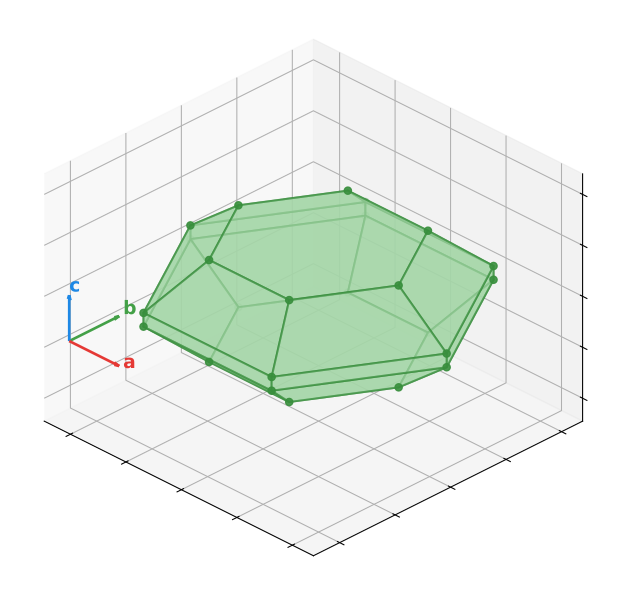
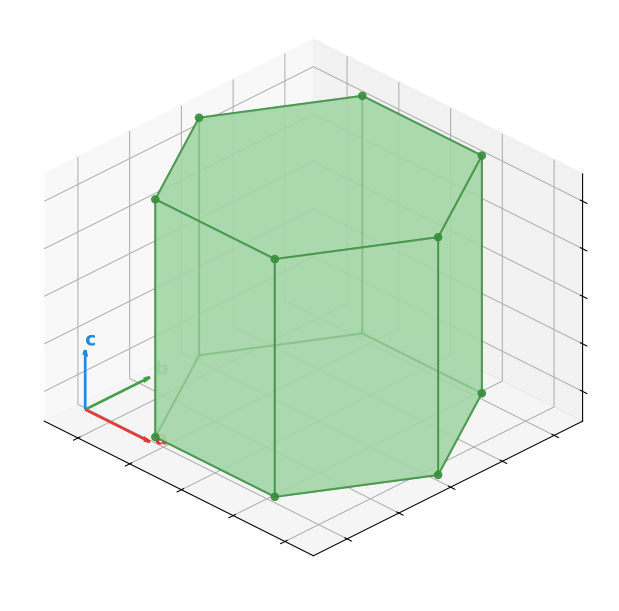
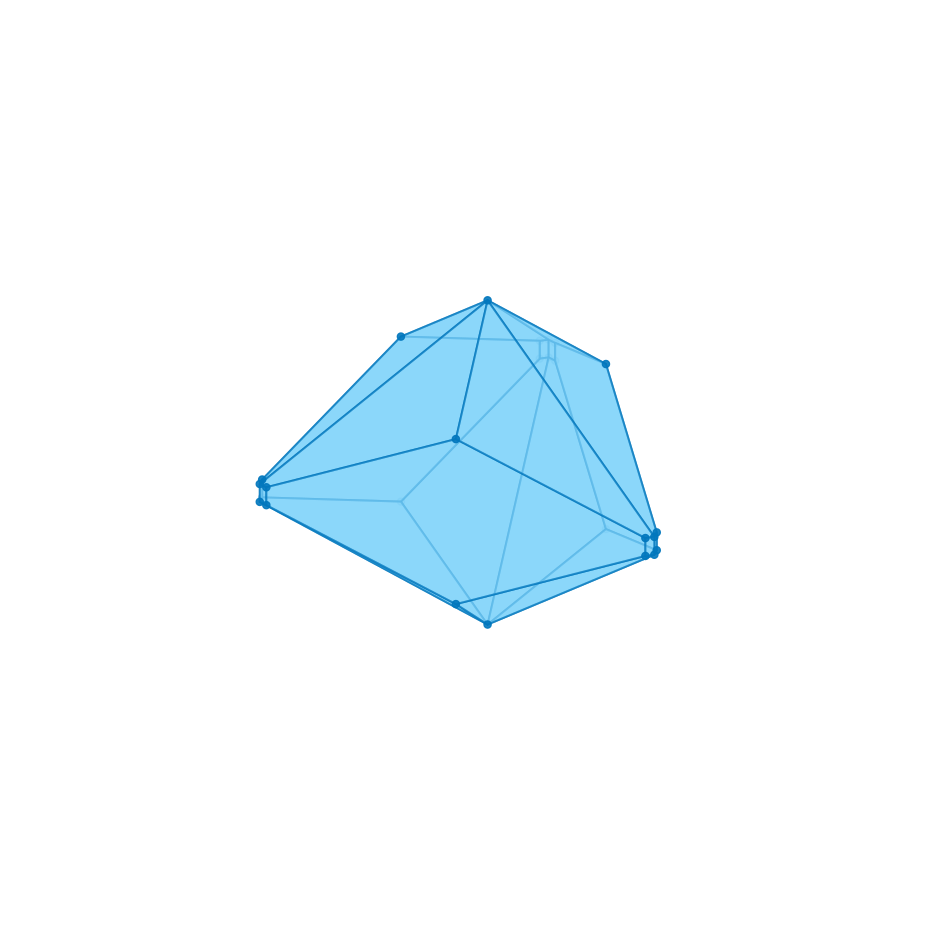
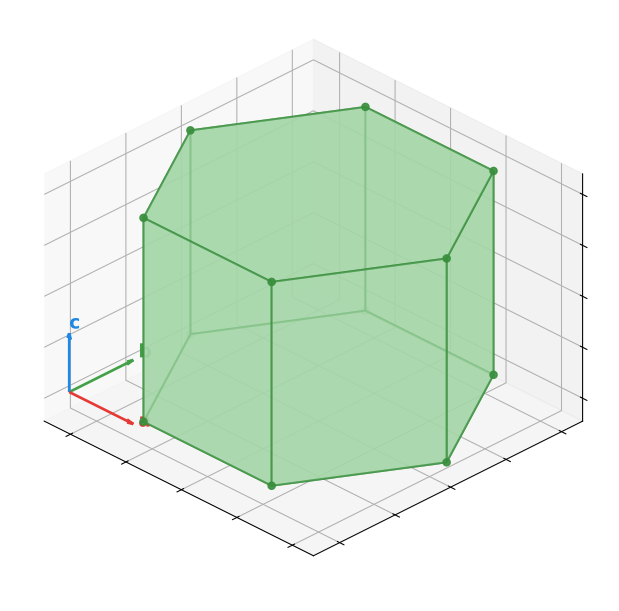
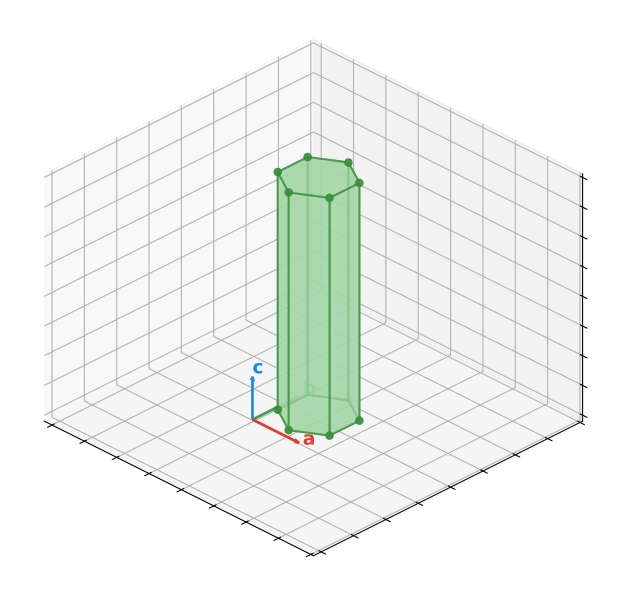
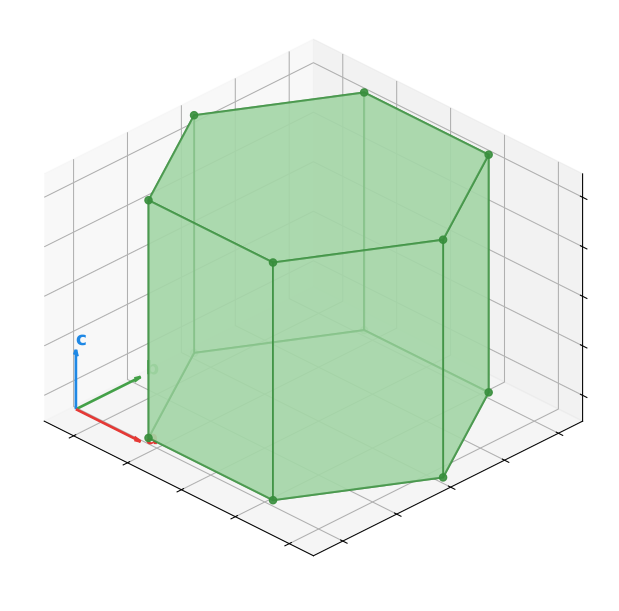
trigonal[-3m]:{10-10}@1.0 + {0001}@0.5 + {10-11}@0.7
hexagonal
-3m
{10-10} {0001} {10-11}
Quick Facts
Hardness
8.0
Specific Gravity
3.61
Refractive Index
1.719
Optical Character
Uniaxial -
Physical Properties
- Crystal System
- hexagonal
- Hardness (Mohs)
- 8.0
- Specific Gravity
- 3.61
- Cleavage
- None
- Fracture
- Conchoidal
- Lustre
- Vitreous
Optical Properties
- Refractive Index
- 1.719
- Birefringence
- 0.004-0.012
- Optical Character
- Uniaxial -
- Pleochroism
- weak: Grey-green / Colourless to pale olive
Characteristics
Colours
Grey-greenOlive greenVioletColourless (extremely rare)
Localities
Australia (Musgrave Ranges, South Australia; type locality; 1967 discovery)Sri Lanka (several reported stones)MadagascarTanzaniaGreenland (minor)
Common Inclusions
Generally very clean
Known Treatments
None known
Crystal Forms
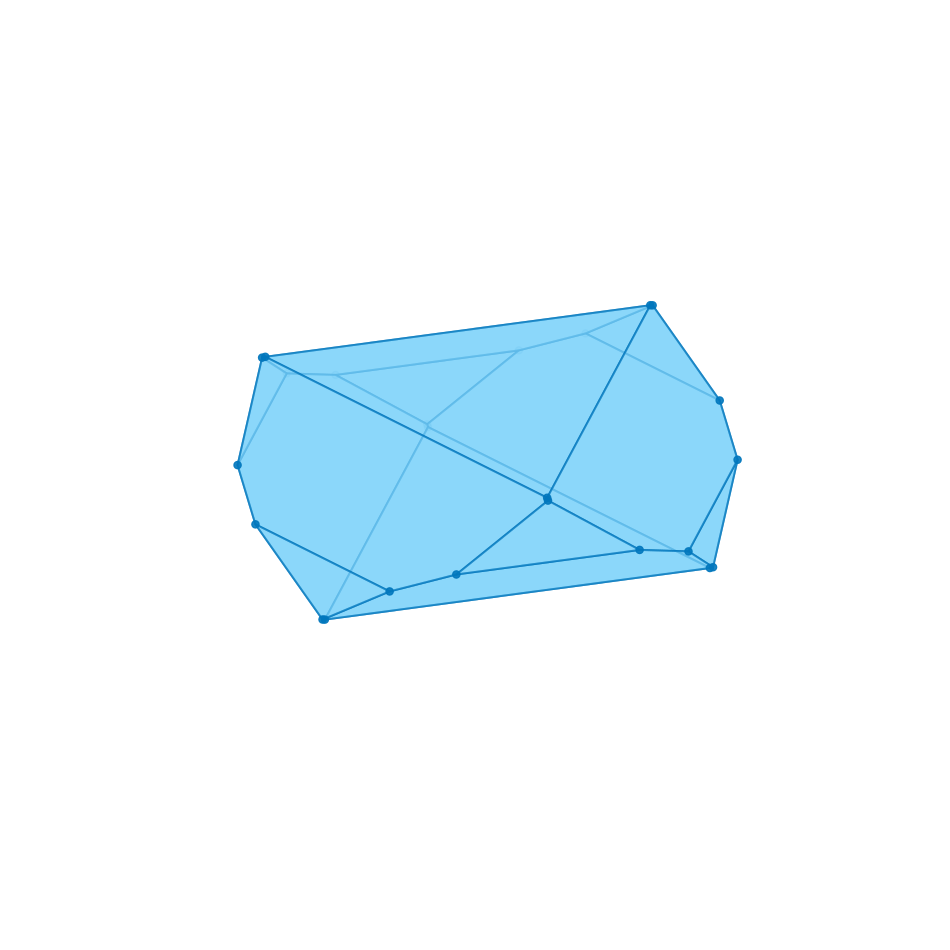
rhombohedron
Diagnostic Features
Doubly refractive (uniaxial negative) — separates from spinel (isotropic); slightly higher RI and SG than taaffeite (SG overlap exists); ATR-FTIR and Raman spectroscopy give definitive separation from taaffeite by vibrational band positions. One of the rarest gem minerals.
Notes
BeMg2Al6O12; hexagonal, rhombohedral, point group -3m. IMA revised name: magnesiotaaffeite-6N'3S per Armbruster 2002 (DOI 10.1127/0935-1221/2002/0014-0389) [VERIFIED via live API]. ATR-FTIR and Raman distinction from taaffeite confirmed by Thongnopkun 2024 (DOI 10.1016/j.vibspec.2024.103733) [VERIFIED via live API]: "ATR-FTIR and Raman spectroscopy efficiently distinguish musgravite from taaffeite using diagnostic vibrational band positions." Higher RI (1.719-1.736) and SG (3.61-3.68) than taaffeite (RI 1.717-1.730, SG 3.60-3.62) but ranges overlap; FTIR/Raman is definitive. Colour cause: Cr, Fe or V substitution (not firmly established for all colours; per VERIFIED.md REJ-07, do not present as confirmed fact). Type locality: Musgrave Ranges, South Australia; fewer than 10 faceted stones known before 2000. Note: musgravite is a separate IMA species from taaffeite, not merely a variety.
Related Minerals
Other minerals in the hexagonal system