hexagonal Oxides
Taaffeite
Formula BeMgAl4O8
Crystal Structure
 #! Species: Taaffeite (magnesiotaaffeite-2N'2S)
#! System: Hexagonal (-3m; rhombohedral)
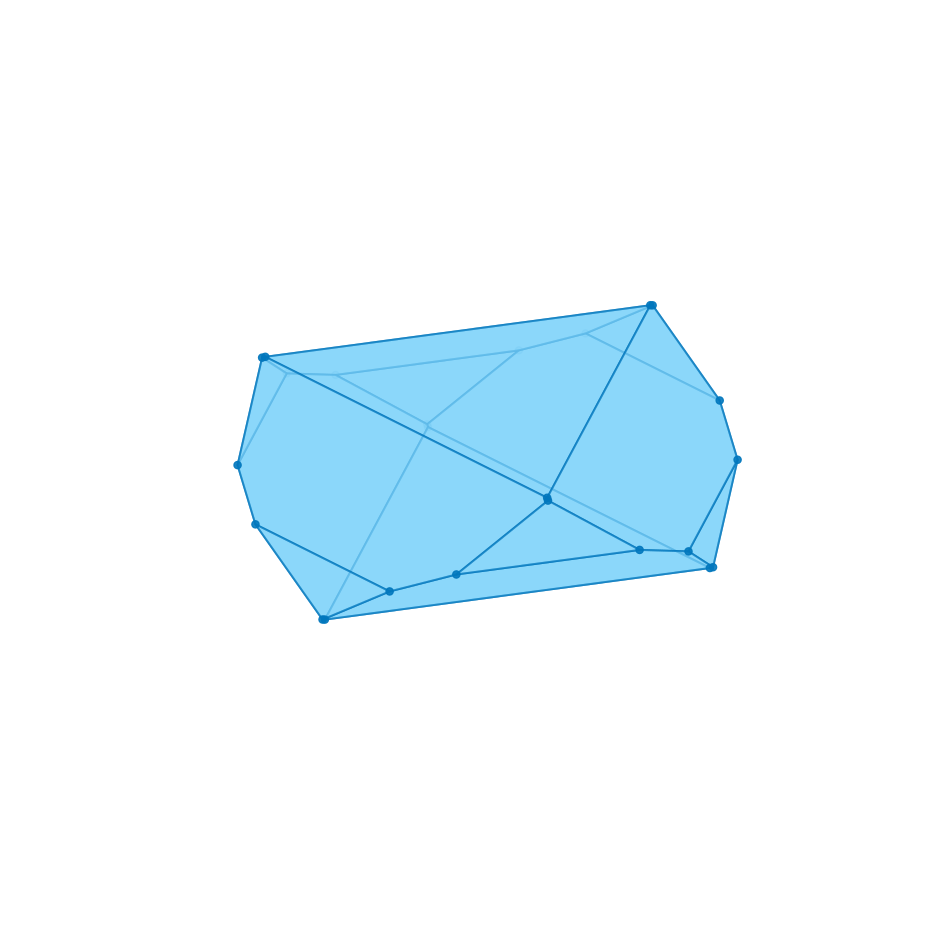
#! Habit: Rounded to subhedral from alluvial reworking
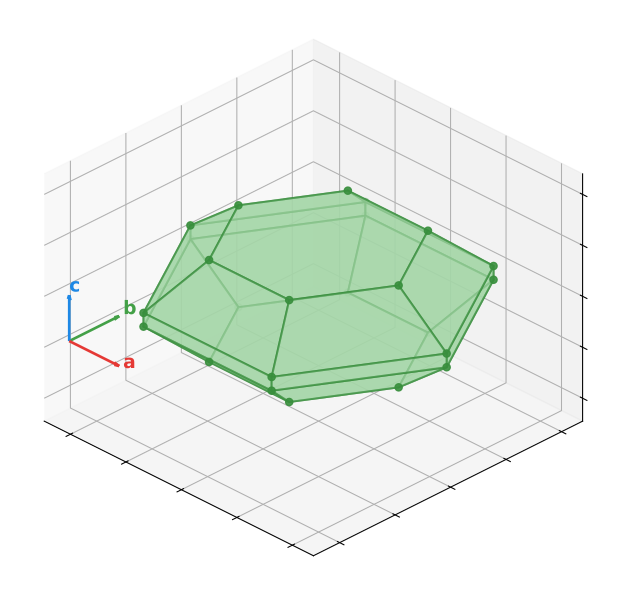
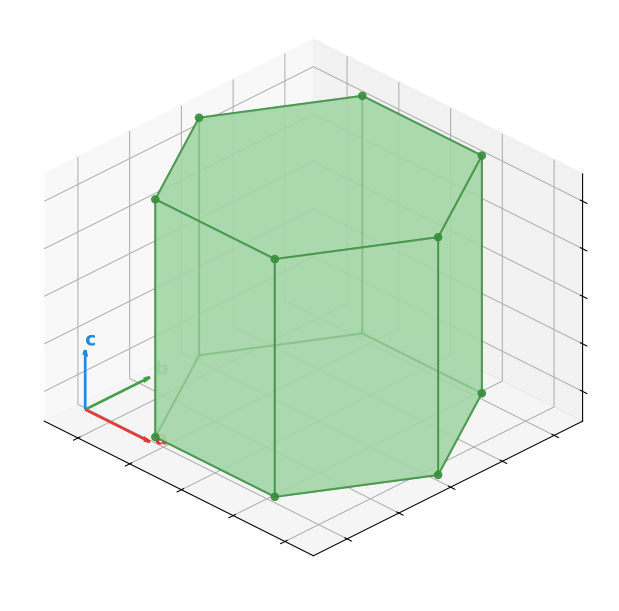
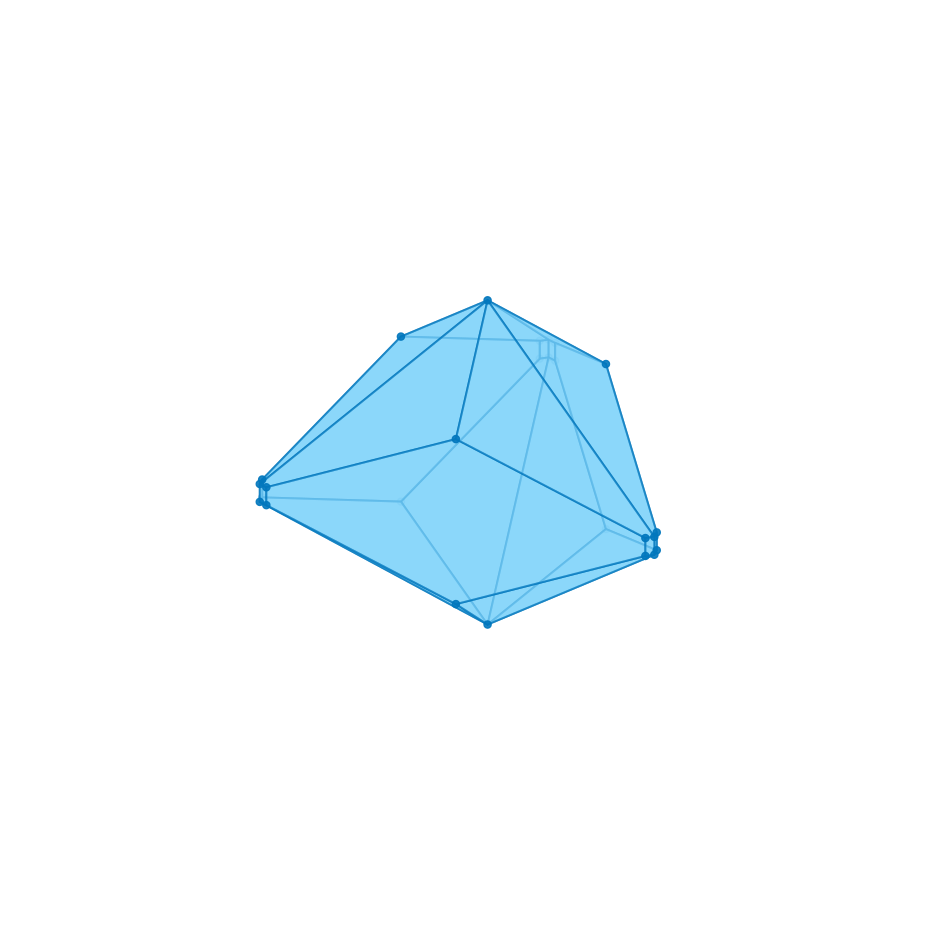
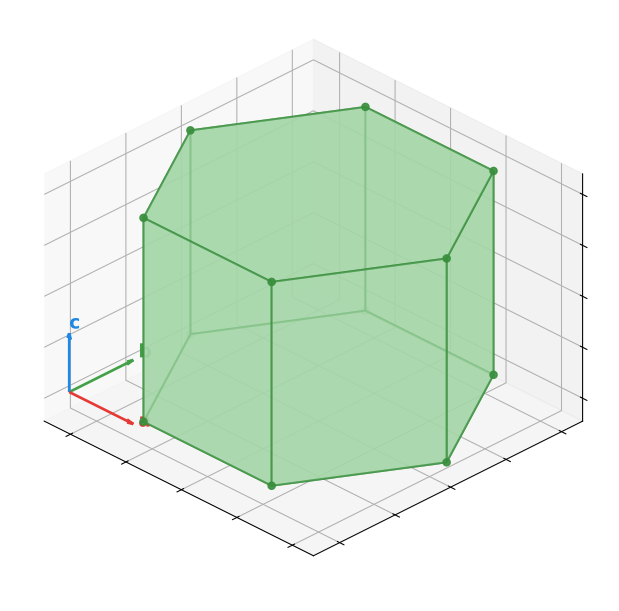
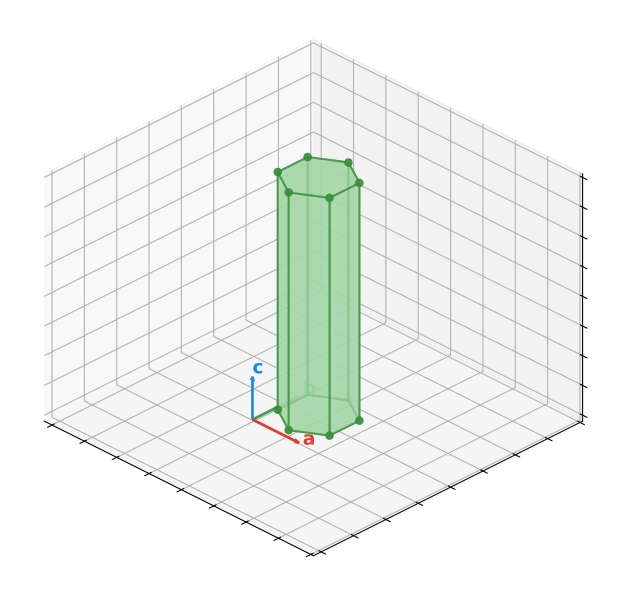
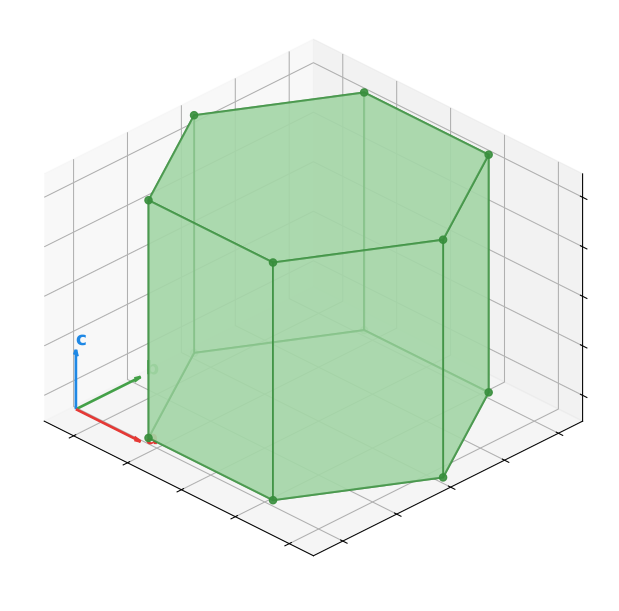
trigonal[-3m]:{10-10}@1.0 + {0001}@0.5 + {10-11}@0.7
hexagonal
-3m
{10-10} {0001} {10-11}
Quick Facts
Hardness
8.0
Specific Gravity
3.6
Refractive Index
1.717
Optical Character
Uniaxial -
Physical Properties
- Crystal System
- hexagonal
- Hardness (Mohs)
- 8.0
- Specific Gravity
- 3.6
- Cleavage
- None
- Fracture
- Conchoidal
- Lustre
- Vitreous
Optical Properties
- Refractive Index
- 1.717
- Birefringence
- 0.004-0.009
- Optical Character
- Uniaxial -
- Pleochroism
- weak: Pale violet / Colourless
Characteristics
Colours
Mauve to pale violet (most common gem colour)PinkRedBlue-green (rare)Colourless (rare)
Localities
Sri Lanka (historic and primary; alluvial gem gravels, Ratnapura)Myanmar (Burma/Mogok; small amounts)TanzaniaChina (very minor)
Common Inclusions
Generally very clean; FTIR and Raman are the most reliable modern ID tools
Known Treatments
None known
Crystal Forms
rhombohedronprism
Diagnostic Features
Doubly refractive (uniaxial negative) — primary diagnostic; immediately separates from spinel (singly refractive, isotropic on polariscope). SG 3.60-3.62 overlaps spinel (3.58-3.65) making SG alone insufficient for separation. FTIR and Raman spectroscopy are the modern definitive identification tools (distinguish from musgravite).
Notes
BeMgAl4O8; hexagonal, rhombohedral subgroup, point group -3m. IMA revised name: magnesiotaaffeite-2N'2S per Armbruster 2002 (DOI 10.1127/0935-1221/2002/0014-0389) [VERIFIED via live API]. Gemmological constants and analytical identification confirmed by Thongnopkun 2024 (DOI 10.1016/j.vibspec.2024.103733) [VERIFIED via live API]. CRITICAL DIAGNOSTIC NOTE (per VERIFIED.md Conflict 7 + flag F-05): Doubly refractive (uniaxial negative) — this is the primary and immediate separation from spinel (isotropic). SG 3.60-3.62 overlaps spinel (3.58-3.65); SG alone is NOT sufficient for separation. RI 1.717-1.730 also overlaps with some spinel specimens. The polariscope (DR test) is the definitive field separation. ATR-FTIR and Raman distinguish taaffeite from musgravite (magnesiotaaffeite-6N'3S) by vibrational band positions. Musgravite: higher SG ~3.61-3.68, higher RI ~1.723-1.736; see separate musgravite.yaml entry. Historical note: Edward Taaffe purchased the original stone in a Dublin gem dealer's parcel in 1945, believing it spinel; the double refraction was noticed and confirmed as a new species in 1951. Gem localities confirmed by Shigley et al. 2000 (DOI 10.5741/gems.36.4.292) [VERIFIED].
Related Minerals
Other minerals in the hexagonal system