tetragonal Tectosilicates
Scapolite (Cat's-Eye Scapolite)
Formula (Na,Ca)4Al3(Al,Si)3Si6O24(Cl,CO3,SO4)
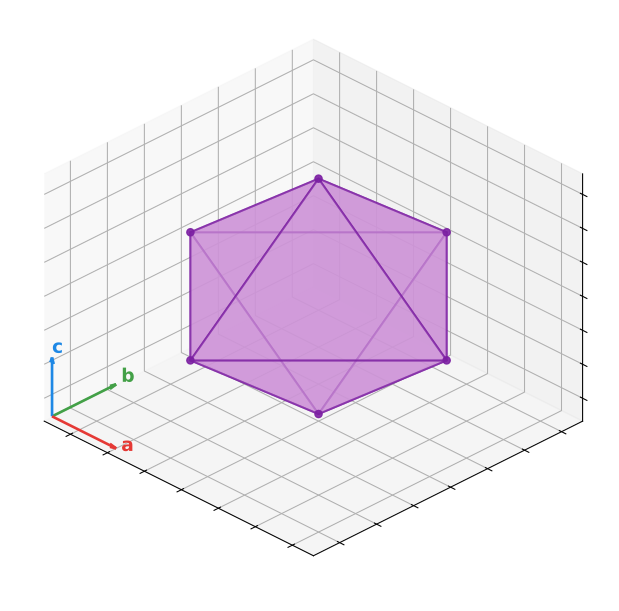
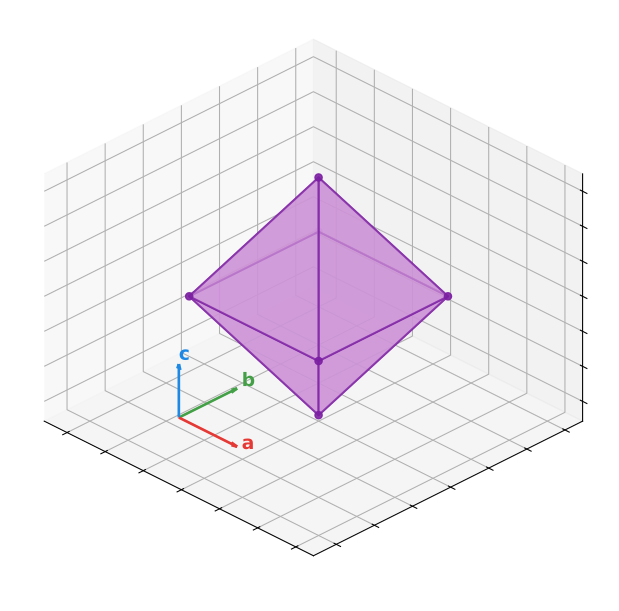
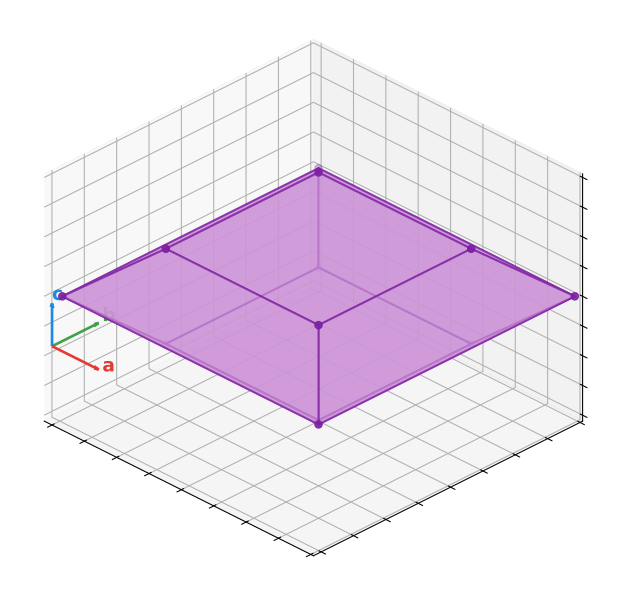
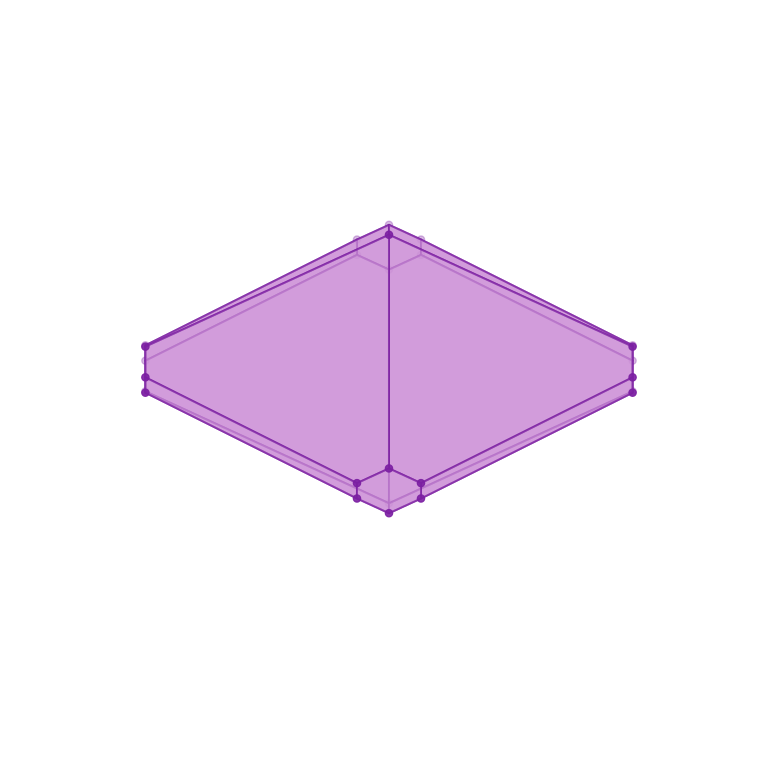
Crystal Structure
 #! Species: Cat's-Eye Scapolite
#! System: Tetragonal (4/m)
#! Habit: Prismatic; fibrous inclusions produce chatoyancy in cabochon
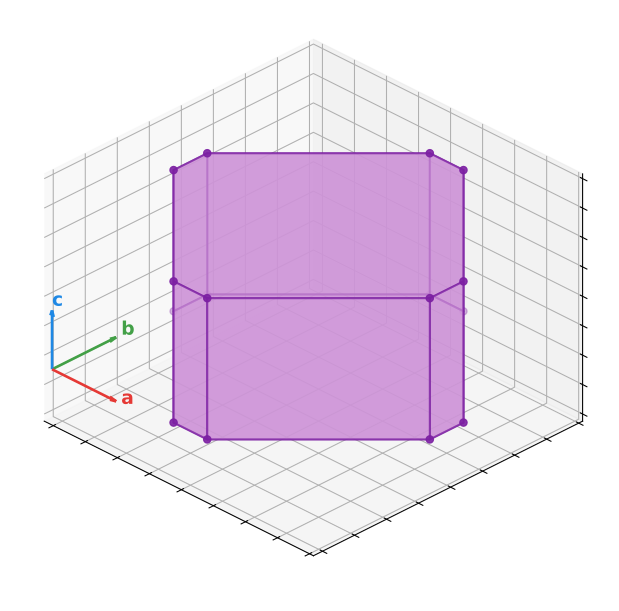
tetragonal[4/m]:{110}@1.0 + {100}@0.6[inclusion:fibrous_tubes] + {001}@0.9
tetragonal
4/m
{110} {100} {001}
Quick Facts
Hardness
5.5
Specific Gravity
2.5
Refractive Index
1.536
Optical Character
Uniaxial -
Physical Properties
- Crystal System
- tetragonal
- Hardness (Mohs)
- 5.5
- Specific Gravity
- 2.5
- Cleavage
- Distinct prismatic in two directions {100} and {110}
- Fracture
- Conchoidal to uneven
- Lustre
- Vitreous
Optical Properties
- Refractive Index
- 1.536
- Birefringence
- 0.004-0.037
- Optical Character
- Uniaxial -
- Pleochroism
- weak: Yellow to orange / Colourless to pale yellow
Characteristics
Colours
Yellow (most common gem colour; colour centres)Pink/lilac/violet (Tanzania)Colourless (marialite-rich)Cat's-eye (chatoyant; parallel hollow tubes)
Localities
Myanmar (Burma; fine cat's-eye scapolite)Madagascar (Ihosy; yellow transparent)Tanzania (pink and violet)Sri Lanka (various including cat's-eye)Brazil (colourless to yellow)Kenya
Common Inclusions
[object Object]Two-phase fluid inclusions; growth planes[object Object]
Known Treatments
Not routinely treated; some material reportedly irradiated to enhance colour
Crystal Forms
prism
Diagnostic Features
Uniaxial negative; strong LWUV fluorescence (yellow to orange in yellow stones; diagnostic — chrysoberyl cat's-eye does not fluoresce strongly); moderate birefringence; cat's-eye variety from Myanmar is celebrated; SG 2.50-2.78
Notes
Na-Ca aluminosilicate solid solution series (marialite to meionite); tetragonal 4/m. Yellow scapolite from Madagascar confirmed by Superchi et al. 2010, Gems & Gemology 46(4):274-279 (DOI 10.5741/gems.46.4.274) [VERIFIED]. Cat's-eye and unusual properties from Sri Lanka confirmed by Zwaan 1996, Gems & Gemology 32(4):262-269 (DOI 10.5741/gems.32.4.262) [VERIFIED]. Colour cause in yellow stones: colour centres (F-centres; not transition metal ions) — Fritsch & Rossman 1988 (DOI 10.5741/gems.24.1.3) [VERIFIED]. Strong LWUV fluorescence (yellow-orange) is a key diagnostic. Two prismatic cleavage directions complicate faceting.
Related Minerals
Other minerals in the tetragonal system