tetragonal Nesosilicates
Vesuvianite
Formula Ca19(Al,Mg)13(SiO4)10(Si2O7)4(OH,F)10
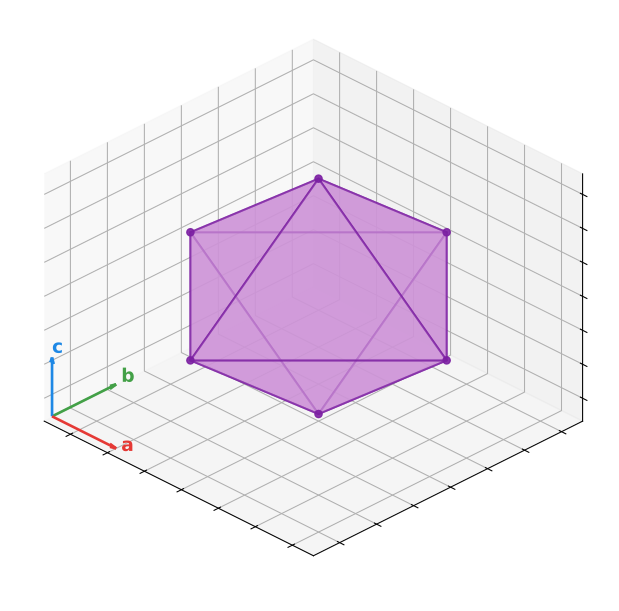
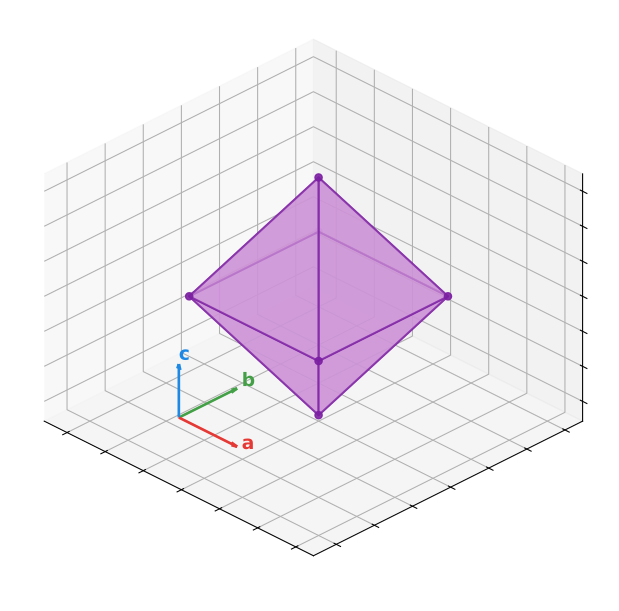
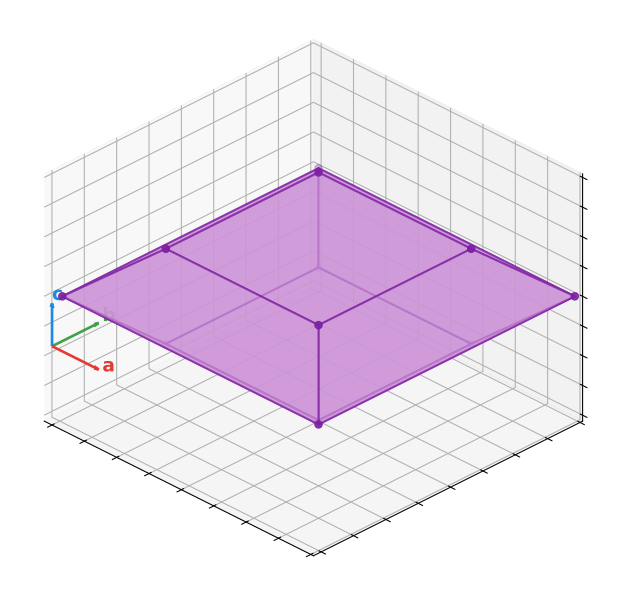
Crystal Structure
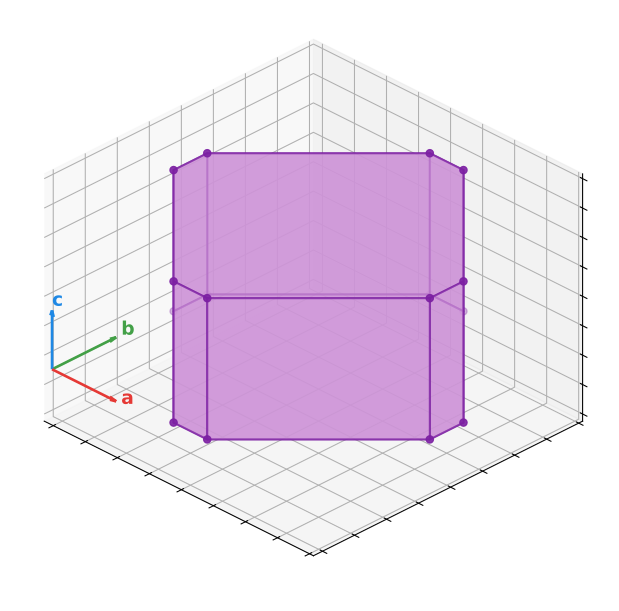
 #! Species: Vesuvianite (Idocrase)
#! System: Tetragonal (4/mmm)
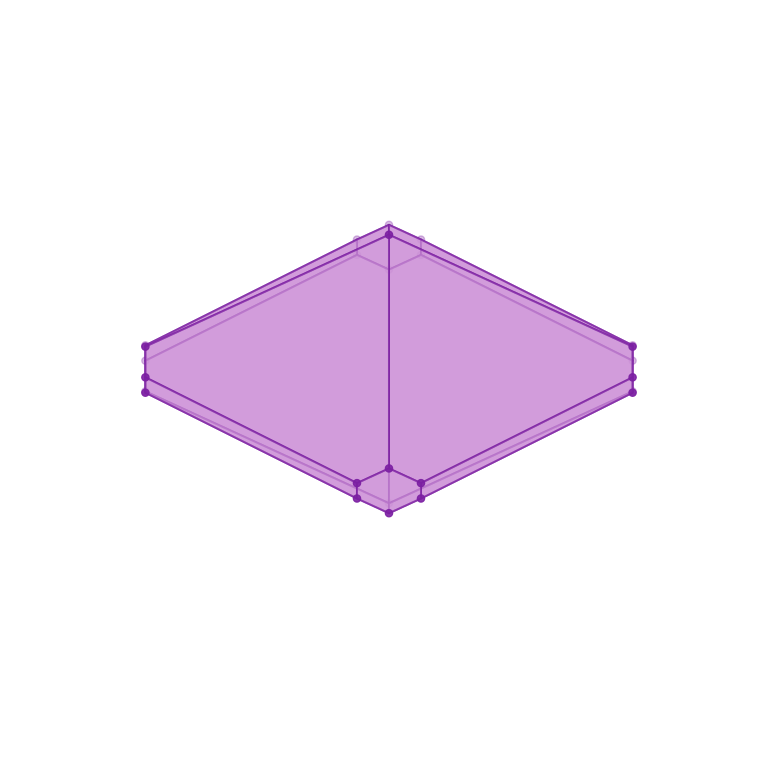
#! Habit: Prismatic with pinacoid
tetragonal[4/mmm]:{100}@1.0 + {110}@0.8 + {001}@0.6
tetragonal
4/mmm
{100} {110} {001}
Quick Facts
Hardness
6.5
Specific Gravity
3.32
Refractive Index
1.7
Optical Character
Uniaxial - (occasionally +)
Physical Properties
- Crystal System
- tetragonal
- Hardness (Mohs)
- 6.5
- Specific Gravity
- 3.32
- Cleavage
- Poor {110}
- Fracture
- Subconchoidal to uneven
- Lustre
- Vitreous to resinous
Optical Properties
- Refractive Index
- 1.7
- Birefringence
- 0.001-0.025
- Optical Character
- Uniaxial - (occasionally +)
- Dispersion
- 0.019
- Pleochroism
- Weak
Characteristics
Colours
Green (most common)Yellow-greenYellow-brownBrownBlue (cyprine - copper-bearing)Violet
Localities
Italy (Mount Vesuvius - type locality)Canada (Quebec, British Columbia)Russia (Ural Mountains)USA (California)KenyaPakistan
Common Inclusions
Colour zoningCrystal inclusions
Crystal Forms
tetragonal_prismpinacoid
Notes
Named by Werner in 1795 for crystals from Mount Vesuvius; gemologists often use the older name idocrase
Related Minerals
Other minerals in the tetragonal system